Showing posts with label Gardening. Show all posts

Friday, March 31, 2023

The backlog shuffle


Blooming now


You know the proverbial saying, of getting it done before Christmas comes? Well this Christmas cactus tells me, I'm knocking on the door now. These beautiful blooms emerge around the festive season. So I'm coming good with a promise I made, at the beginning of the year. Something about an update on life. 

Friday, September 2, 2022

Spring back


Early September, 2022


In Australia, it's early Spring. If you live near the Toowoomba region, you know it's Carnival of Flowers time. The annual celebration for the Garden City. This year though, Spring represents a whole new way of life for me. It's the place of regrowth, from a rather harsh prune in my personal life, last year. Come have a wander around my garden, and catch up for a spell.

Tuesday, November 5, 2019

Saltbush city limits

Winter 2017


This post is all about one of my favourite, drought resistant plants: Old man Saltbush. It's somewhat bulletproof in all regards, and only seems to grow bigger, in a drought. However, there are some care tips I've discovered since 2014, which considers their natural limitations. I've had five years to observe, how they've performed in our landscape.

Wednesday, September 21, 2016

A cut of beauty

I was doing some pruning in the yard yesterday. I love to prune, because it means I get free mulch to lay on top of the soil. There was one particular plant I pruned yesterday, before realising, I didn't want to use the foliage as mulch.

It was way too pretty for that...


My white rice flowers, aren't exactly spectacular as a bloom, but en mass, they look quite beautiful. And they don't require much moisture to grow or flower. So my kind of plant!

I couldn't have them all on their own, in the vase however, so added some African daisies, a few sprigs of rosemary (with blue flowers) and a few grevillea flowers. Their spiral shaped pattern, is particularly beautiful to me, and a perfect offset against the delicate rice flower blooms.


I reckon I scored a beaut bouquet, for inside the house, just taking the time to plant, prune and mulch. A renewable source of beauty. Plus, these particular plants have the reputation for longevity, once cut too. So it should be around for at least a week or more.

I'm pretty happy with that. Finding the right plants to grow in our conditions, mean we can finally have cut flowers inside the house.

Thursday, June 25, 2015

Nutrient bomb

Unless you haven't caught on already, I'm somewhat of a lazy gardener. Scratch that! I'm an acreage gardener, which means my time is limited. Inevitably the garden has to do more for itself. So anything which can do my job, just by way of its normal biological function, I want it.


Leaf fall


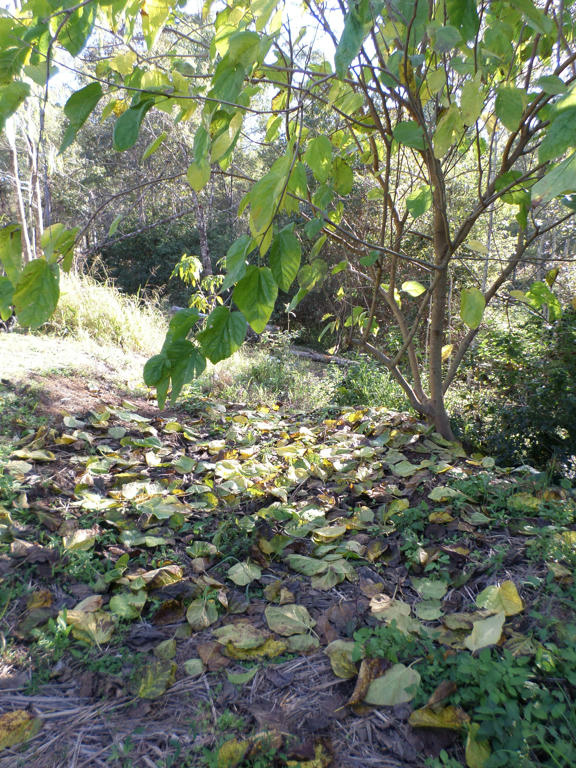
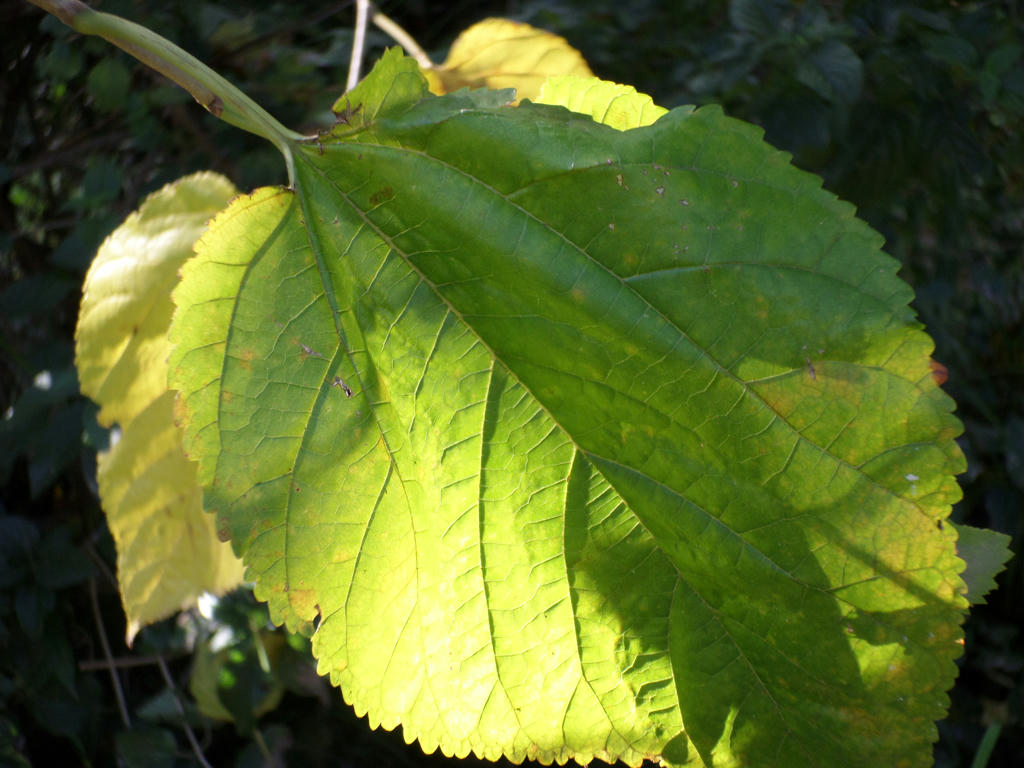
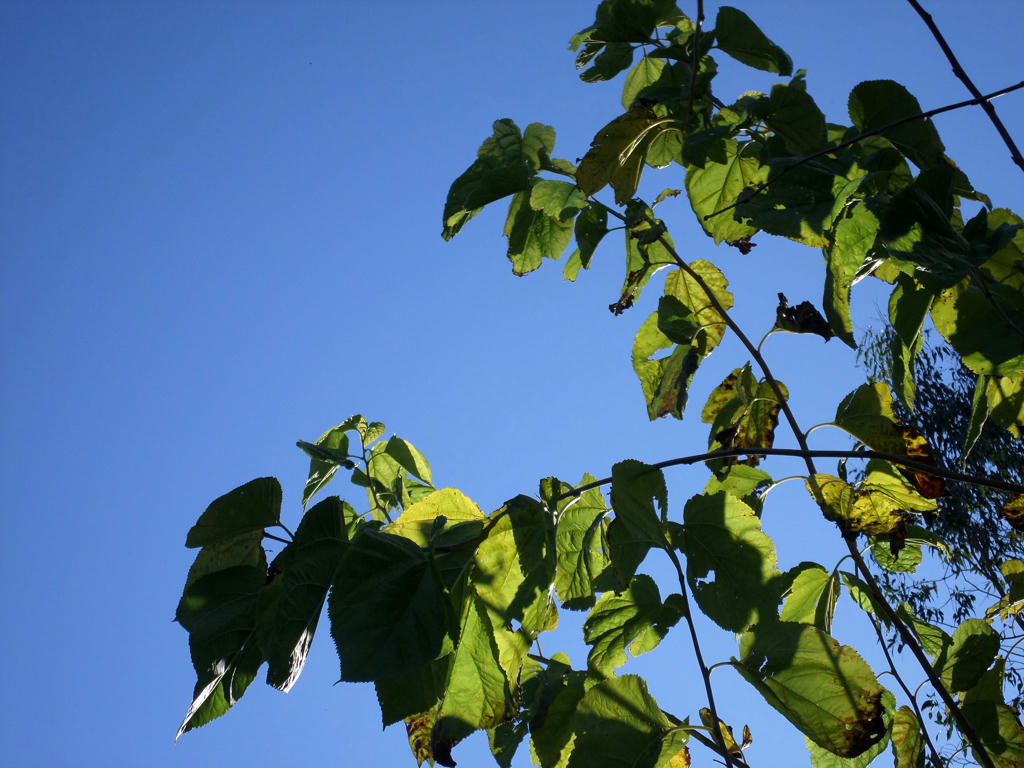
Enter the humble mulberry tree. What a fantastic invention this was, for nutrient deprived soil like mine. It drops a giant nutrient bomb when the weather gets cold enough, via its fallen leaves. We're nearly at the end of the first month of winter, and its still holding onto some of them.


nature's carpet


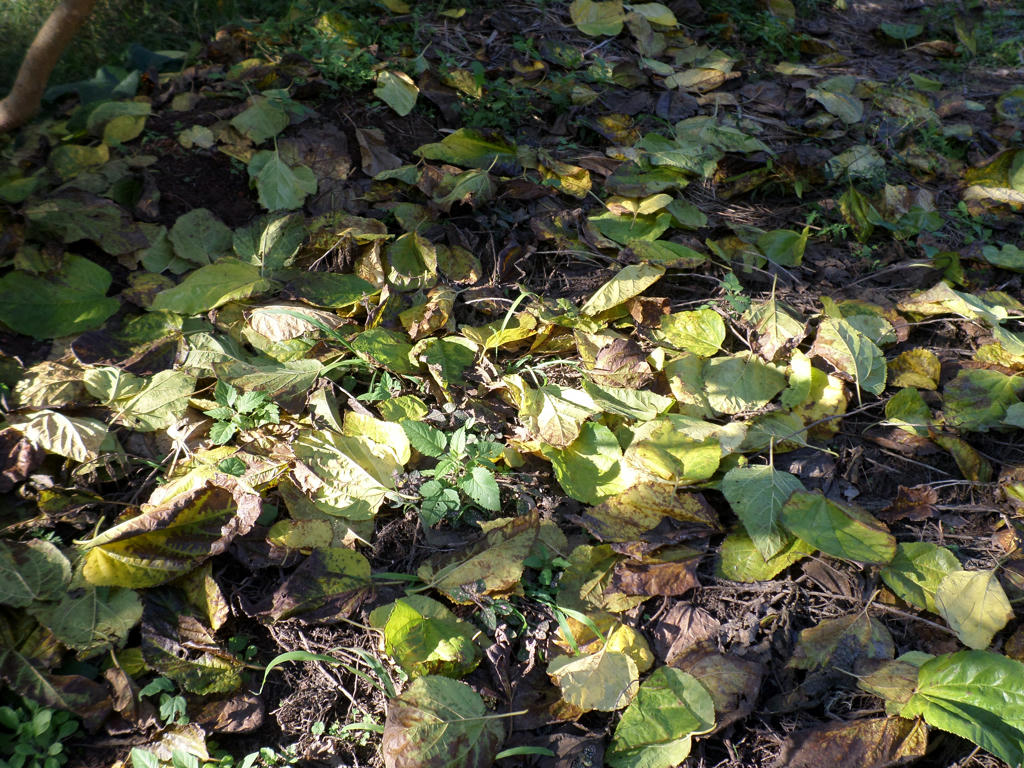
But it's also dropped a lot more leaves on the ground. Since clearing the lantana and building the swale to help water this beast, leaf drop this year, has been exceptional. Just what I need to put those ground dwellers to work (otherwise known as worms, microbes and fungi) to turn my sandy, clay, loam, into dark chocolate soil!


Growing leaf mould


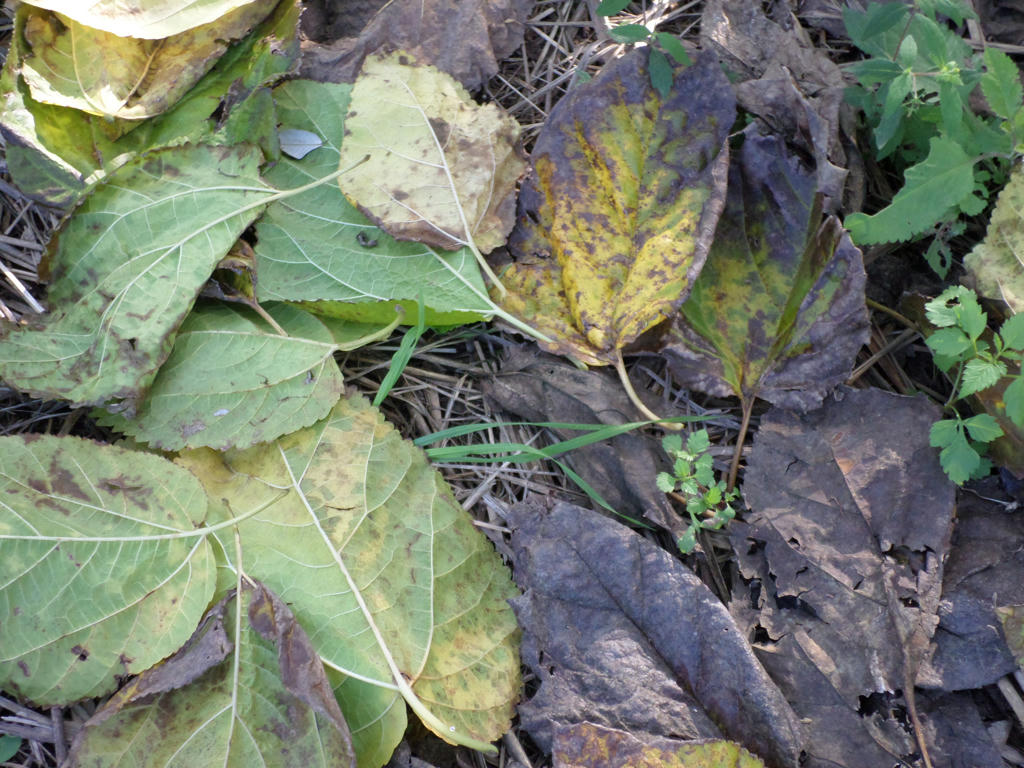
All these wonderful leaves which once fed the tree through photosynthesis, are now in various stages of decay on the ground. Some are turning black and being absorbed into the soil, some are still in the process of browning off, and some are even still green. A patchwork quilt of energy, being stored away for next years' growing season.


Under story


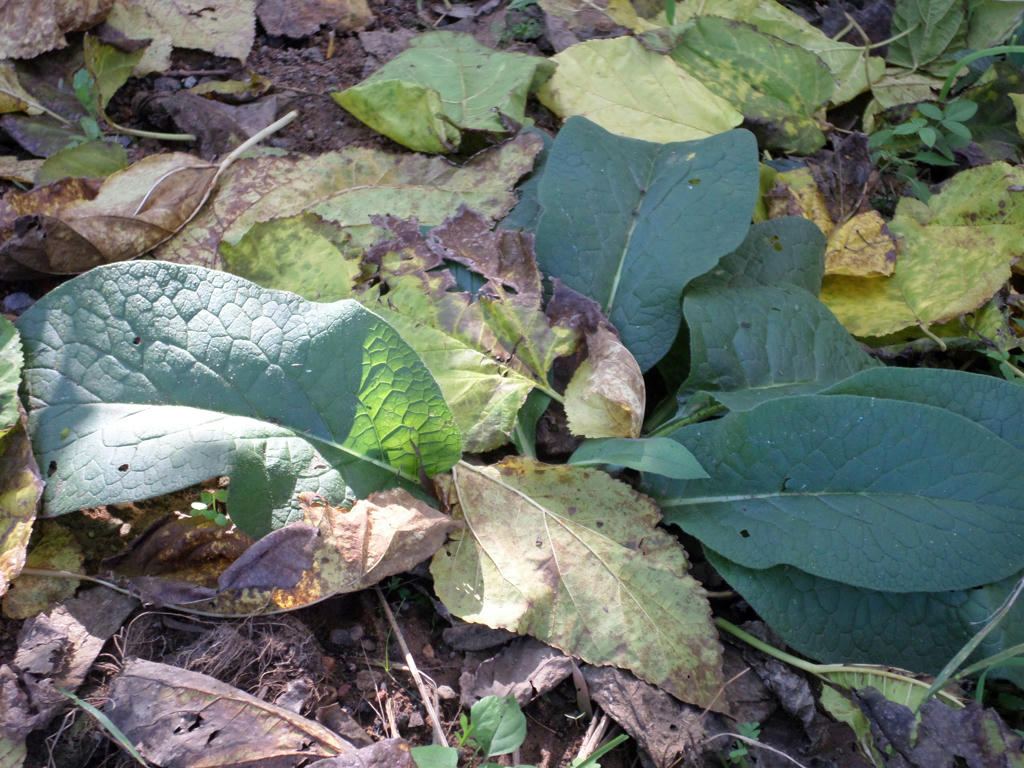
But there are even more benefits to this incredible tree of life-giving qualities. I have managed to grow comfrey under it! I've tried several times unsuccessfully to grow comfrey, but it turns out it likes the dappled shade provided under canopy trees - especially in our blazing hot summers!

The mulberry is large enough to create a micro climate, which is protecting the comfrey from dying back. It will be interesting to see if the comfrey leaves hold all winter. It seems to be getting a good feed from the mulberry tree though.


Sunlight and leaves, like the birds and the bees


In permaculture circles, this tree's function is termed a Dynamic Accumulator. To me its just a big old nutrient bomb, infiltrating the soil to connect many different lifeforms together. The magic after that is healthy soil, which can store nutrients and water better. Plants seem to like those things, so I try to have as many dynamic accumulators, as possible.

Weeds are another dynamic accumulator, and so is grass. They grow, store nutrients, which can all be released back into the soil to feed the ground dwellers, all over again. Year after year. So long as we understand their purpose and manage them according to their biological function.


Blue sky on a winter's day


Personally, there is something deeply romantic and mystical about a tree. Its a living companion. A quiet presence which moulds itself into the landscape, drawing life, like an invisible magnet. It never leaves its one place, but so many things change around it because of its existence.

Nutrient bomb, dynamic accumulator, romantic escapade, whatever you want to call it, a garden is poorer without them.


Monday, September 1, 2014

Bloom'in here

Spring has officially arrived, but in truth, it had been knocking on winter's door for at least a month. Now is the time of year which becomes every gardeners treat - to walk around the garden and see some of last year's efforts, putting on a show.


Pink Aster Daisy


This daisy has finally gone full bloom, after contending with kangaroos determined to push it sideways to get past. This is one hardy plant. I've taken several cuttings already, and placed them around the garden. None have died on me yet, despite not receiving a lot of attention.


Verbena Candy Cane


Another plant I have successfully propagated next to the chicken coop, is the Verbena. It's living in terrible soil but this is an exceptional plant! I love the candy colour, but will find other colours of the verbena to grow as well. Simply because its so hardy.


Grevillea Honey Gem


Behind the other chicken coop, is the beautiful Grevillea Honey Gem, living up to its name and drawing every kind of honey-eater to its display. There are wattle birds, Rainbow Lorikeets and Hummingbirds feasting whenever they can. There is one particular, territorial wattle bird, which has claimed our front yard for its own.


Wattle bird


They do their best to perch on top of the highest branch, to search for intruders. I'm doing better this year with more native flowering plants, so spats are fewer. I'm doubling my efforts this year, to get more flowering natives into the ground and prune back the others to increase flowering times. I love having birds in the garden, so its something worth committing to.


Lavender Avonview


I didn't think this lavender was going to make it last summer. The western sun scorched it to a near crisp. It's looking much better now and is currently blooming. This one threw three seedlings nearby, which I happily scooped up and even created a rock wall for transplanting one in. I'm hoping those seedlings make it through this summer.


Eremophila (native fushia)


Another bird attracting native, which is currently in bloom, is the Eremophila Glabra. There is a lovely range of colourful flowers to select from this particular group, but I love something about the light-green flowers contrasting with the silver-grey foliage. It's very subtle and refreshing.


Recent wall project


This was the mature specimen I had growing on top of the rock-wall I recently built too. I've propagated from this plant successfully, and have three cuttings planted in different spots around the garden. The small honey eaters seem to especially love the flowers from this plant, but even the much larger wattle bird, will happily feed from it too.


Black mulberry tree


The mulberry is sporting new leaves and fruit. Maybe we'll stand a chance to eat some this year? The birds always seem to beat us to them. This tree is only a few years old, and we're so impressed with how low maintenance it is, that we put in another tree too. More berries for the birds, and us!


Star Jasmine


As mentioned previously, the jasmine is in full bloom and smelling so sweet and delicious. It brightens up this edge of our garden, and makes it worth the trip to the garden shed.

It wouldn't be the end of winter, without the ever faithful kumquat tree putting on a vitamin C show...


Kumquat 'Marumi'


This is our favourite snack food in the garden at the moment. We grab a bight on the way to feeding the chickens, or hanging clothes on the line. It's planted in an ideal position to snack on. Fruit which isn't edible, gets rolled across the lawn, for the cat to chase. She loves chasing kumquats. Strange cat!

Seeing what worked in the garden and what hasn't (another post) has given us some ideas to try different strategies this year. There's quite a lot of work to be done and material gathered for writing other posts. In the meantime, I hope you're enjoying Spring in the Southern Hemisphere, or savouring Autumn which has just started for North Hemisphere gardeners.


Wednesday, July 2, 2014

My life as a gardener

Its difficult to know how to describe my life as a gardener and make it simple. Because gardening is simple when you think about it, but the learning process is not. My mum was a gardener, and so were both my Nan's. Watching them and loving to be outside myself, impressed me to continue the gardening tradition in my own backyard.


 Tools of the trade


We're not fancy gardeners though, it was mostly born out of necessity for food - the older generations being from a farming background. My gardening journey however, hasn't just been limited to food acquisition, thankfully, as I don't grow food very well (yet) because I'm still learning how to.

Everything I put in the ground nonetheless, requires a practical purpose. Shade, shelter, food, wood, windbreak, mulch accumulator, nitrogen fixer, ground cover - it all has to fit together like a layered cake or it doesn't work.


Cover the soil with ground covers


I've had my fair share of failures too. So many failures! They're my learning pegs though, and has made my life as a gardener all the more interesting for it. Failing made me pay attention to other elements more than just the usual suspects of climate, soil and moisture. Failing made me experiment with different types of plant combinations, and where to plant them outside the norms! Failing made me look at permaculture more seriously too, which had a lot of valuable information to contribute.


When all else fails, garden in pots


I still wouldn't consider myself a successful gardener, but I haven't given up and that's the main thing. I take sabbaticals, when my life gets too full of obligations elsewhere, and that's when it really tests my garden. How it survives and produces without me, is something I learn from too. See, I'm not sure we should become slaves to our gardens. It should be a relationship where the gardener and the garden have equal expression. To dominate completely, means you miss out on half the conversation and take on all the work.


French marigolds


I've probably missed the most obvious point about having a garden, and that's the beauty aspect. They awaken all your senses. But that's not why I build a garden - the best part of my temperament is expressed when I can pour myself into nature. It centers me. Something about the energy, the simplicity and the diversity all merging together, subdues me. That's what I love about having as many plants as I can. It's what inspired me to keep at propagation, even though I failed consistently for several years. I wanted more of this centered contentment, which wasn't fleeting like everything else.


New plants from old


Once I learned to propagate successfully, I haven't stopped! We all need a driving force in our lives, and I guess gardening is mine. I'll grab my secateurs and take some cuttings, or I'll pop some seeds in the ground and wait for the rain to arrive. It's the promise of something to come. Something to germinate. Something to surprise me later on.


Fallen frangipani


So even though my life as a gardener hasn't been perfect, its still been very worthwhile. I look forward to the seasons, the shapes and the smells. I'll look at that bare patch of earth and imagine what I'll plant there.  What's more, I hope all this activity and experimentation will lead to growing more food successfully. That is my ultimate goal.


Kent pumpkins on the brew


What is your present goal, or what would you like to do more of as a gardener?


Wednesday, May 28, 2014

Niche gardening

When something fails on a consistent basis, no matter how hard you try - it's time for a complete rethink. This is how I feel about garden beds for growing food. They may work in other places with reliable rainfall or money spent on irrigation, but I've never had much luck with them. Even when I've had a rare year of ideal rainfall, as soon as I'm needed elsewhere, everything bolts to seed or gets infested with overgrowth. For me, garden beds are too much work which I cannot always be available for.

I still keep some garden beds though, because I like the dedicated space for experimentation - but its not something I can keep going for long periods of time. It's not rare for them to become overgrown for over 12 months.

I finally realised recently, nature had been building inexpensive growing systems for millennia - I just had to change how I thought about growing my own food, and more importantly: where!

I have more to share about niche planting in my own garden (in another post) but for now, here is a video sharing the same exploits I've been applying in place of traditional growing areas.


Plays for around 15 minutes


I thought it was filled with some really good ideas, and ultimately utilising a resource which was already there - the forest. I don't think you have to actually own a forest to get something out of the video, but it follows the lines of what I was already thinking about niche gardening. Find a niche with whatever you already have growing naturally, and exploit it. The forest provides canopy and products to sell, but buildings can also provide canopy to be exploited, without having to erect anything new. It's just a matter of observing where on that building, it gets the most sunlight or the least, then decide what might grow best in those locations.

I wonder if pumpkin vines would do well, planted just underneath a raised house? So long as they weren't planted near stairs or any other access point to the house, the pumpkin vines could virtually be ignored until it was time for harvest. The coolness under the house would stop evaporation during summer. I wonder how well watermelon would do in those growing conditions too, as they seem to be particularly fussy about moisture? If I had a raised house, I'd be experimenting with what I could grow underneath it.

Our house is built on a concrete slab instead, so I grow stuff around it - utilising the micro climate of the concrete. Really, the possibilities are limitless though. I like the thought of utilising what's already there, and seeing what a humble little plant can do to transform that space.

If you have any magic growing areas outside the traditional garden bed, please do share.


Sunday, May 11, 2014

It has begun...

Late autumn 2014
7 years old


It's a little earlier than expected, but its time for our canopy tree to be cut down. David has started trimming the branches first, as they were overhanging the roof and a small tree underneath. By cutting the branches on one side, it will also make the tree lean to the heavier side when it's felled.


Tree bling


But there is still time for one last snake skin, to glisten in the afternoon sunshine. How many skins has this tree helped remove from growing tree snakes and pythons? Many I suppose...


Late afternoon


And there's still time for one last view through the leaves and the blue sky. A real treat for Peter and I in the afternoons, when we sit underneath our canopy tree and talk about its journey. It was the first tree to shade him, when he first came home from the hospital. It was Sarah's favourite tree to play under for so many years of her early childhood. And I told him recently, the tree was going to fall soon, with its branches and trunk to kiss the ground, one last time to feed it.


The stalker


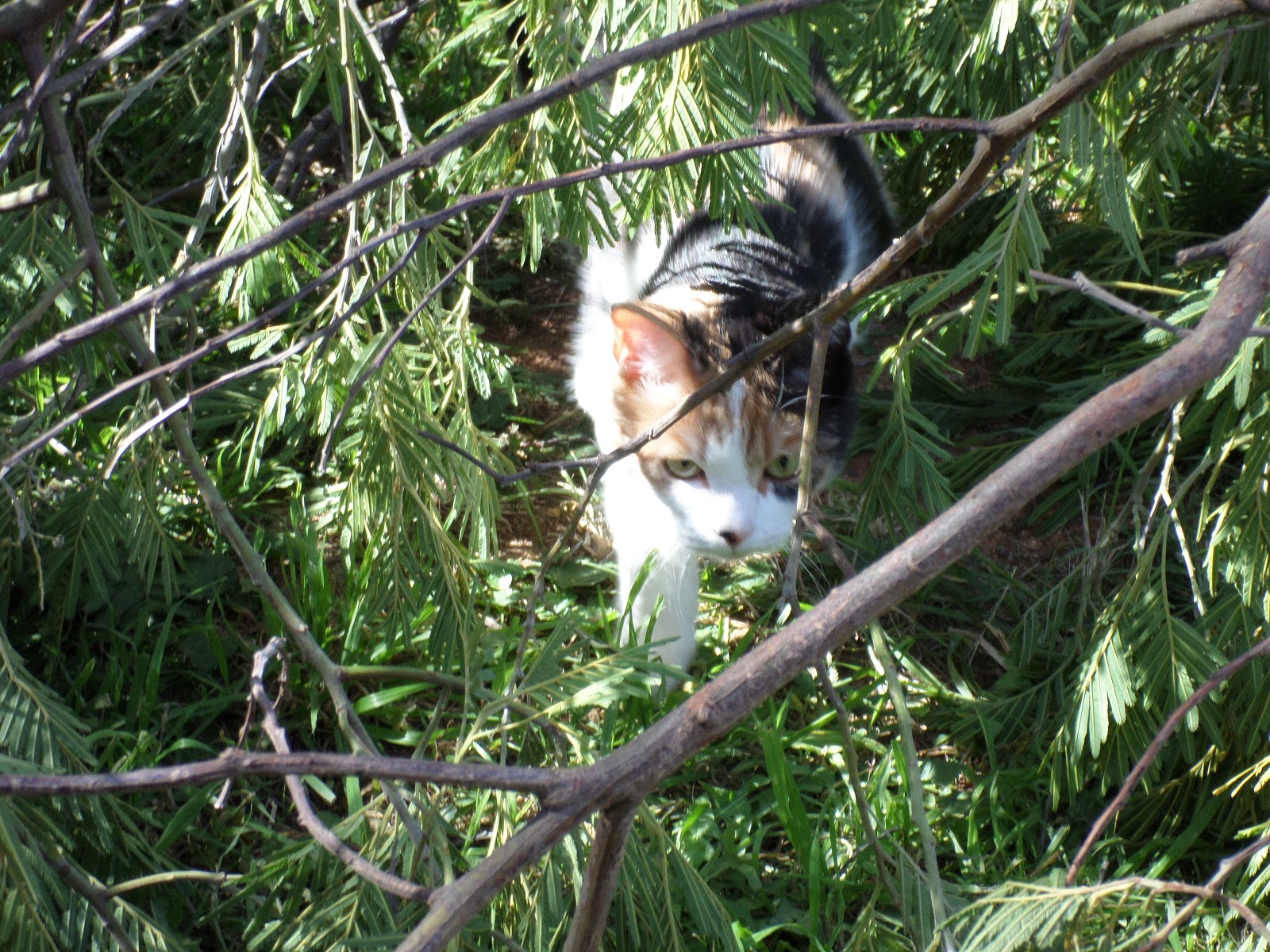
There is so much life given by just one tree. It's a miraculous gift. Our cat now well on the mend, had time for one last adventure, underneath its branches in an entirely new way too. I know she will miss this tree as well. But the good news is, we have another tree growing underneath, which needs the sunlight to help it grow - starting life, somewhat like this...


2009


And after five more years, it's grown quite a few more branches. Our hot-pink frangipani will love the new light conditions, even though it's almost due to start shedding leaves for the winter.


Shaded by canopy tree


Maybe it will become our new canopy tree. A longer living one, and not quite so tall as to shed its leaves in our gutter. Being deciduous, it will let in the sunlight during winter too. But I think it needs a companion, to replace the one we are taking. I like to think with every tree we take, another two can be planted. That's how important trees are to us. They bring the animals right to our doorstep and offer a calm place to sit in the garden.

There was a reason the tree had to go slightly early - we were planning to take it down mid winter anyway. But more on those reasons soon.


Friday, March 21, 2014

New discovery

Back when we thought we might have to move, I started rescuing fruit trees which never flourished where I planted them. If they lived, they would move with us, if they died, such was their fate in the ground anyway.

Much to my surprise, when several plants were dug up and placed under the verandah (in a pot) they really weren't the same trees at all. I had a pineapple guava, at least four years in the ground, which had barely grown. I gave it water in the beginning but then let it fend for itself. The plant never died, but then it never seemed to flourish either.


Pineapple guava
new growth (left) old growth (right)


The remarkable thing which happened after spending several weeks in ideal conditions, the guava's leaves, started to change. Instead of being tiny, grey and a little fuzzy, they put on new growth that was green, shiny and substantially bigger.

I had noticed these spindly traits on a lot of the plants I had in direct sunlight with no micro-climate. I just thought they were meant to look like that - despite all the lovely photos I saw on the internet of other peoples lovely specimens. Perhaps I just got a dud variety?

I almost wish I'd rescued it sooner, but then I never would have made this new discovery in the field, about how important micro-climates are. Plants need other plants - layers, or they just make it through the summer without any new growth and definitely no fruit. The difference between four years growth and a few weeks in ideal conditions, is remarkable.

That's how quickly a plant can grow in our area during summer, when it has an agreeable micro-climate. Needless to say, my focus this autumn is to get a lot of support species into the ground to create better micro-climates around the garden. I'm glad to have planted pigeon-pea trees in pots, just for this cause. I got cracking with planting today, but there are many more to go.


Thursday, February 20, 2014

Natural foods

Despite the inhospitable environment we try to grow European type foods in, there is nonetheless an abundance of natural foods growing around us.


early morning blooms


We have two small (coppice) eucalyptus trees in full bloom near the water tank. Because they're coppiced - happened when the earthworks to build the house, cleared the area, and they grew back - but their trunks are shorter, so we can see the flowers closer to ground level.


branches dripping with nectar


While we don't eat these abundant blooms, if we kept bees, we'd sure be self-sufficient in honey. But the Rainbow Lorrikeets and Fruit Bats love to gorge themselves on the blooms. We hear the bats at night, but they (thankfully) don't squabble much. Plus they're kind enough to avoid hitting the car parked nearby, with their bat scats.

The blooms smell incredibly sweet, and its no wonder it draws all the nectar feeding animals like a magnet. It's quite the feeding station, early in the morning and again at dusk.


loves the concrete near the house


Another plant which springs-up voluntarily near the house, is purslane. It's a native herb ground cover, which is also somewhat of a super food. It contains more omega-3 fatty acids, than any other leafy vegetable you could consume. It seems to be doing really well this year, with more of them popping up, so I may just add some to my scrabbled eggs. Our guinea pigs get pickings most of the time too. I wonder if that's why they've lived such a long life?

I do love the eucalyptus blooms however - it will be sad to see them stop, along with the regular animal visitors. But it's nice to know, even in an inhospitable environment like ours, there are some things doing exceptionally well without our input.


Thursday, September 19, 2013

Uh-oh and yay!

Just as I went outside to capture some pictures of the strawberries I managed to plant (finally) I stumbled across a crime scene...


Uh-oh...


Something had pulled the strawberry plant up and dug another hole nearby. Thankfully it was only one plant out of the ten. I know we get bandicoots, but I suspect the culprits are bush rats. They always attack the strawberries and tomato plants at this time of year.

It wasn't hard to plant it back in the ground and I won't lose any sleep over it. We've had to live with native animals since we moved here - it goes with the territory of choosing the bush as our home. The kangaroos have even managed to crush some new bulbs I planted this year, due to them moving into the garden during winter/spring when there is little feed to be found elsewhere.


Sparaxis tricolour


Here is one of the bulbs which managed to flower (not sure how many will) and its a sparaxis. I was very excited to see it's little cap peeping out from the garden, to shine some colour on my day. Ever so enticing to look at, I even decided to use it as my new header image. There was a mixed collection of bulbs of this variety, so I wonder what colours will emerge next?


A Callistemon variety, named after Australia's first saint
~ Mary MacKillop ~
"I am not afraid of any of the difficulties, they rather make my courage rise" (26/3/1873)


The "yay" part of this post, has to do with the other flowers which are just starting to emerge. Right now it has to be the beautiful callistemon shrubs which are stunning in the morning sunlight. Their red bristled flowers are dripping with nectar, and don't all the honey-eaters love it! I have the Mary MacKillop and Kings Park Special variety flowering at the moment, and of course, many grevilleas which seem to flower all year round. I love seeing the different kinds of birds visit the garden, and it makes struggling to grow anything here, all the more worthwhile.

What is a garden after all, if you cannot share the delicious banquet with other living creatures?


Hardy ground covers


I'm also happy to have discovered two hardy ground covers which seem to do well in our climate. These are the Rhoeo and the Verbena candy cane. The Rhoeo (more commonly known as, Moses in the Cradle) is in the foreground of the image and took a season or two to really settle in. Some kind of small leaf-eater, would attack it every winter but it somehow managed to bounce back - now it has very few predators and needs no attention from me at all.

I love the colour of the verbena too (so happy) and it's as tough as old goat's knees, as the saying goes. It spreads really well, which does wonders for providing natural mulch in this area. Verbena has many different colour varieties and I also read, do well in containers or hanging pots. I love a no hassle, attractive plant.

Anyway, it is the Toowoomba Carnival of Flowers this Saturday, and I'm hoping to take Peter to visit the beautiful parks and gardens for the very first time. David and Sarah will be pre-occupied with something else, but I'll share more on that after the weekend.


Saturday, September 7, 2013

Trying to...

I have been wanting to return to the garden since Peter was born, but he's not an easy baby. Not like my first. He's struggled with wind so sleeps very lightly. It's not uncommon for me to spend most of the day with him. Because of this, much of my attempts at gardening look like...


Luffa sponges get recycled back into the ground


Half finished projects...like strawberry plants waiting to go into the ground. I have a wonderful little area which I've been planting in this year. It's kind of an experiment. I would love to share more, but it's so very slow in the making. It's a small area, incorporating an old wheelbarrow (and a few concrete blocks) nestled into the side of a slope.


Attempting to create a better micro-climate


The wheelbarrow is planted with herbs which are growing really well. I love having fresh parsley and chives in my scrambled eggs again. Herbs tend to shoot to seed very quickly for me, as it gets too hot here. But utilising the slope and a few spindly trees, it does manage quite a bit of shade during the day.

I look forward to sharing the success of this particular area, and hopefully when Peter is a few months older (fingers crossed) I'll have more time to do it. I know this season of baby raising will pass soon enough and I'll get to enjoy the garden full-time then.


Wednesday, May 9, 2012

Garden love

It's probably no secret but I really love my garden. It's not necessarily what it looks like that I love, but more I get to spend time there and feel connected to something real. We all need something real to interact with in life.


The family spent some much yearned for time in the garden on the weekend. It was a lovely sunny autumn day. We soaked up the rays, moving dirt and making new pathways. The dry stone retaining wall we've been working on for quite some time now, is nearing the planting stage.


What better than a "garden", to go searching for appropriate plants? What I love about my garden, is if I stick a small plant in the ground and let it grow - I get bigger plants for later! Which is exactly what happened when I decided to move these dwarf mono grass from under the clothes line.


It seemed just like yesterday, when I first put them in the ground. Holy Mac! Did it ever look that neat and tidy?


Thanks to these deep concrete blocks, the mondo grass has enormously long roots now! It was in the plans to move the mono grass anyway, because when we had the deluge of 2010 and 2011, the area around the clothes line became completely flooded.


Hardy little munchkins, those mondo's!


So we need to raise the area under the clothes line, and widen where the water runs away. I've got a few ideas for that, but will report on progress later. For now, just think bridges and rock ponds! I am.

I love pottering in my garden on warm autumn days like this. I think about the next growing season, I dream about the plants I will plant, and I soak up the ever shortening days of sunlight. Winter will soon be here.

While the garden will rest during those winter months, Dave and I will be working hard outside. Just like we did on the weekend. Time for some time-elapsed photography, to make it look a heck of a lot easier than it was.


In the beginning there was a dry-stone retaining wall...


Then some strange carbon-based lifeforms appeared out of nowhere!


They decided they liked it so much, they would move in for a while...


This made the dry stone retaining wall, very happy.


And they all lived happily ever after in the garden of love.


~ The end ~


Well...almost the end...I swear if this romance with my garden ever ends, I want to be compost by then.