Showing posts with label Swales. Show all posts

Wednesday, January 27, 2021

Defying gravity


Red marker is where I met the hornet


Today, is the first day back at school, for our youngest. Grade 3. Time certainly marches on. So we should do something meaningful with the time we have - wherever we are, and whatever condition we find ourselves in. Presently, I'm grateful to have the full use of my hand back, after a recent injury. So I can finally return to the companion post about dealing with soil erosion, on the front slope. It's a long overdue project, because it's such a tricky slope.

Friday, January 8, 2021

On the mend

After rain
 

The new swale alteration, before my weird accident involving it, is doing as I'd hoped. It's been much fuller, with heavier rain recently, but my hand wasn't up to taking photos then. About 6 days is how long it took, to use my hand properly again. It's almost like it was, mobility wise - being able to twist my wrist now. However, I still can't put as much pressure on it, when it comes to gripping, pulling, or even typing on the keyboard. Which is why I haven't replied to all those wonderful comments, you all left.

Sunday, January 3, 2021

Then this happens...


Oops


I tried taking a picture of my injured hand, one handed. My chest played a crucial role, stabilising the camera, because David is currently at work. Thankfully he wasn't yesterday morning, when the weirdest accident happened. I was surveying the swale I was working on recently, to plan my next step. Turning towards the ramp, to get some tools near the house, a huge hornet comes flying at me. I try dodging it, but everywhere I moved, it re-positioned to go for my face. 

Friday, January 1, 2021

Another gardening year

It's all happening
 

Well hello there 2021. Didn't you come out of nowhere. I made no new-year's resolutions, because I was just happy to have a blank slate! Let me be deluded a little longer. Of no pressing responsibilities. School holidays are in full swing, and the weather has been gloriously perfect. Instead of baking in the summer heat, I've been pottering outside, in what feels like autumn weather. One thing I do know about this year is, I will be gardening. In fact, I couldn't imagine a more perfect way to spend the first day of the year, than in the garden.

Sunday, December 20, 2020

Feedback Frenzy

Stay on the designated walkway
 

As I've been mulling over what to share about the garden, on Friday night, we received a downpour. Perhaps the biggest rainfall we've seen since January 2011, when the infamous Queensland floods destroyed the Lockyer Valley. That's nine years of increasingly, smaller amounts of rainfall, and my garden had to cope all that time. Much to my surprise, there are successes when plants survive. However, the soil takes a beating when fast water is on the move again. Especially after drought conditions. This latest event has revealed problems I still need to address. 

Thursday, February 13, 2020

How-to Hugelkultur

The subtropical jungle, returns


Perhaps I should say, how NOT to Hugelkulture instead? As these are the lessons I've learned about Hugelkulture in arid climates. Right now, it doesn't seem very arid, since the two-year drought has finally broken. Receiving another 17 mm yesterday. This is wonderful news of course, as it's allowed me to return to planting fruit trees again. But in so doing, I reassessed some areas I used Hugelkultur in. The past two years of drought, taught me a lot about their application.

Sunday, November 17, 2019

The watering hole

Dust-pan


Since all the natural watering holes, in the landscape have dried up, our bird-baths have been working overtime. They're filled twice a day now, to accommodate the visitors. Which is about 18 litres of water, per day. We have the larger bath, for mostly birds and adult kangaroos to drink from. The small one is for Joeys, who have vacated mum's pouch. But not quite large enough, to reach the tall one yet. We've had different configurations over the years.

Wednesday, July 10, 2019

Creative destruction

Behind the chicken coop - can you see the swale?


If you remember this image, from the "Do nothing" post, I said we were in the midst of making some creative destruction, in this area too. Part of the reason it's overgrown at all, is due to poorly designed access. It was started many moons ago, when we first dug the swale, but never finished properly.

Wednesday, July 3, 2019

Aerial view

2007 - initial front terraces, as the house was under construction


We've been living on our 5 acres of bushland, for twelve years now. Easter, was the anniversary of moving in. Our leap into large-scale gardening, happened to coincide with the cultural celebration, for new life and new beginnings. Easter. Since this cultural celebration, just passed - it was fitting to share an areal view, of what all that Natural Sequence Farming, Permaculture and Natural Succession Gardening, has achieved during that time.

Wednesday, March 27, 2019

The hand you're dealt

You know how at Easter, after stuffing yourself silly on chocolate, you swear never again! Until the nausea is forgotten about, and you're back to eating the regular 4 squares of chocolate, a day? Yes, I really do that. The 4 squares, that is. I don't gorge on chocolate at Easter any more though - not like I used to. Yet there are other vices, which still manage to catch me out.

Like doing online research, and learning how to use computer graphics programs, in new and interesting ways! I had a binge session recently, followed by the swearing off technology, until my senses returned. Hence, the sudden silence on the blog front.

But I have stuff to share, you funky people...so let's get to it!


Pitter-patter


Remember this stuff? It's meant to fall from the sky during our summer rainy season. But decided to skip it entirely, and make a late appearance, in autumn instead. I wasn't going to mention the first storm. Or the second. The one with large hail. Ultimately though, I was expecting the storm activity to disappear. Thankfully, it decided to love on our property a while longer, with steady, all day rain.

So that now...


 It's accumulating


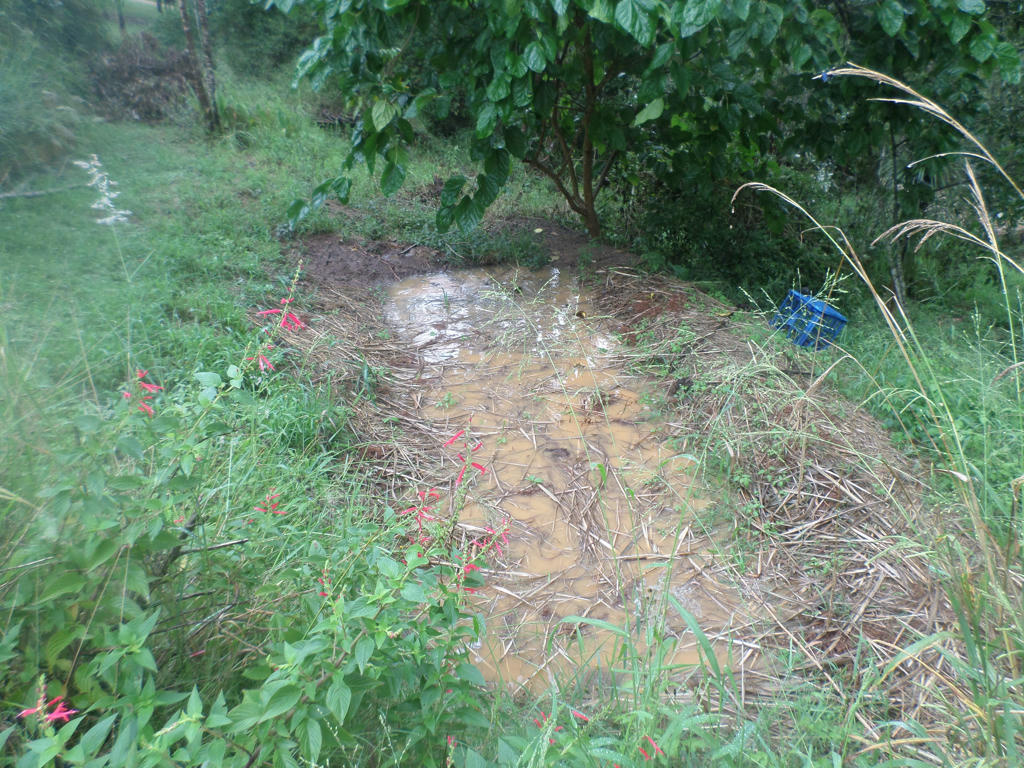
...puddles are begging to form in the swales again. This sight always makes me so happy. But after this year, I recognise a swale of itself, is only as useful as the rain falling from the sky. So I look upon it, a little more soberly. Extremely grateful however, we still got a reprieve from the dry.

So now life can slowly begin to emerge around the new water source again.


Sweet cycles


I caught a couple of dragonflies, dancing around the pooling water. Teasing it with their feet and tails, as they dipped in. I had to follow them, up and down the swale. Because their iridescent wings, didn't want to stay still long enough, for my camera to focus in.

This is part of the tantilising orchestra though, which always emerges after the rain settles in. I couldn't resit chasing the dragonflies, in the rain, as it felt like forever - since hearing the delicate whisper of their tiny wings.


 Hello there


The resident kangaroos were feasting on the new greenery, which they had waited for the rain to bring, also. October last year, was the last flush of decent greenery they got to enjoy. Now her gaunt facial features, from the summer drought, are just starting to fill out again. Which also makes me very happy to see.

But again, I reflect soberly. How quickly it can all change.


 Remember these, hugelkultur mounds?


This was mostly dust, not that long ago. The paths are slowest to respond to the moisture, with all that compaction. Yet how quickly the greenery emerges elsewhere, after the rain. I was beginning to wonder if we would see it, before winter came again.

It's still not the kind of rain we're used to dealing with - the reason we built all those swales and ponds to begin with. But we could still feel the soil take a deep breath, it desperately needed.


 Like a sponge


With the dwindling heat of autumn, the moisture still has time to break down the plentiful supply of wood material. I've already seen several blooms of fungi emerge. While hopeful to see at all, it's still not as plentiful as normal years. But really, what is normal nowadays?

The weather patterns are changing, and maybe this is the new normal?


Human ingenuity


Unlike our dry-stone retaining wall, which is pretty permanent and predictable - nature has been fluctuating to more extremes. More heat. More time between drinks. Even more rain when it does fall, which causes more erosion.

Really the jostle is to find some kind of medium, on this ever fluctuating scale of normal. Is drought normal, for this particular 10 year cycle. Or is it, the wet? In the wet, is a great time to get plants established. In the dry, it culls a lot of potentials and breaks your heart.


Like night and day


When everything starts to green up again, the casualties, really begin to stand out. This hardy native, Westringa (right) is cactus now. Yet the Brazilian cherry on the left (also known as Surinam cherry) was able to pull through. Although, the cost was not seeing any fruit flushes, all growing season. There just wasn't the rain to spark that particular event.

Still, it lived. Which cannot be said for some of my other fruit trees.


Bupkis baby


I've lost all my bananas, an avocado, and surprisingly a mulberry tree. These are normally, the most bulletproof edible fruit trees I've come across. This one was planted in the lowest gully, which normally floods. It hasn't happened for well over a year now, but I thought surely this specimen had the best location for survival?

The dry slopes are much less forgiving. Yet the oldest mulberry we have, lives on those very slopes, and managed to pull through.


Original mulberry (centre)


It's extremely sparse on the leaf front, as it's normally covered in leaves. But it's also an older tree by several years, than the one which died recently. It was established in a flood too, so had the opportunity to send it's roots down deeper.

I also credit it's survival, from being planted on the berm of a swale, as well as stacking functions around it. While I think it looked like the flooding gully, was giving the other mulberry more water, it wasn't being held up as much, as the swale was doing, for the surviving mulberry. The directed water in the swale therefore, really encouraged the tree roots to go down deep, in the years we were receiving rain.  

The observation I take from this particular drought, is while water is indeed the crucial factor here, large amounts (passing by) are no indicators of success. It's "directed" water, held back, which really sets up the roots better for extended dry periods. So I need to identify how to concentrate water, when it does fall from the sky, and place my edible trees around it.


 Lush and green again


The clear winner though, has to be the grass. An annual which seeds itself quite readily, is the quickest to respond to water. It all but browns off at the surface, and we never scramble to save it. Yet it completely overtakes the garden, as soon as the rains return.

The heavy seed-heads are bent over, when they're laden with water too. So it carpets the ground, to hold-in more moisture. I know it looks unruly and unkempt, but we hardly scramble to control the grass either. For starters, there's just too much of it, but it also has a vital cycle to perform, setting seed for the next drought. So it can emerge quickly, after the rains return again.


 An early morning, walk in the bush


How do I feel about it all though? Grateful. Sober from the experience. And finally, hopeful in a new directed purpose. Not that swales are the be all, and end all. Especially when it comes to establishing plants (short term) in a drought. Seriously, they're useless when it comes to that! But you've got to cop it all on the chin, and be realistic. This is nature, we're dealing with here. It's not made to please us, or our ideas of what a garden is meant to be. It's there to make us better gardeners, whatever the season.

So set up your infrastructure, regardless, to take advantage of the wet cycles. For me, it's swales and ponds. But be prepared to find the best medium, in the drought cycle too. Whatever that happens to be. We're talking decade investments in a garden for resilience, not annual returns. Although they're always nice to have, and I will always "try" to glean some kind of annual edible harvest. Greenthumb nirvana cannot be based on that premise alone though, or its likely to bring disappointment.

Because annual plants are short lived, and designed to expire quickly anyway. Throw in an extreme event, and they're the first to fail. It's more disappointing for me, when my perennial trees fail. But I've got to cop that on the chin, also. If I choose, I can accept the feedback delivered, and work with it. That's what nature's going to be doing, without me anyway - so why not become a willing student in the process?

I hope your gardens are delivering treasures, whatever they're being subjected to, at the moment. I know we don't always get, how we desire it to be. We can still play the hand we're dealt though, to the best of our ability.


Tuesday, November 20, 2018

Stacking functions

While permaculture may encompass many different things, what I love about it from a land management perspective, is the intelligent design. It saves effort and resources, if you can align just one element, to do more than one thing! Or to put it another way - stacking functions.

Nothing can demonstrate this better, than a simple Mulberry tree...


Beginning to ripen


This was my breakfast, yesterday morning. I love nothing more than to meander under the mulberry, and pick black fruit, during spring. Those fruit, the birds leave me behind that is! Thankfully, this is a particularly large tree - being the first one we ever planted.

Nonetheless, before the spring rains arrive, causing the leaves to grow and hide all that emerging fruit, the birds always threaten to strip the tree bare. Even before the fruit has a chance to turn black! But somehow this mammoth tree, always manages to offer us (and the birds) a delicious bounty, before all the fruit is gone again.


 At least, 12 metres (40 ft) tall


This tree, is taller than Middle Ridge chicken coop - now my shade house for propagation. If you live in a suburban area, perhaps a tree like this would be better managed (as recommended) by heavy pruning. This encourages more fruiting and allows you to access more of them - rather than the birds.

But this is where stacking functions, and intelligent design enter, for larger acreage. Our problem is too much sun exposure. It dries out the land. So in this instance, I require the tree to reach it's absolute maximum potential. The more it grows, the more it shades. With less moisture lost to evaporation, during the hotter times of the year, I'm getting better water efficiency from what does fall from the sky.

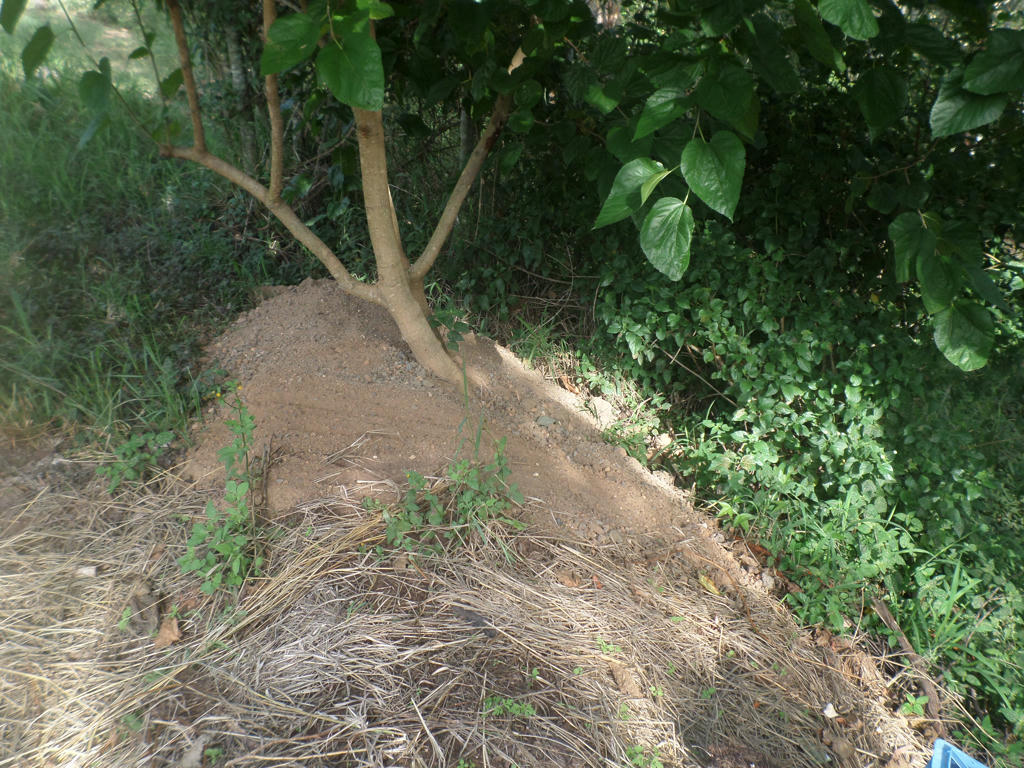
March 2015


The mulberry tree was planted in 2010, and by 2015, I was implementing a new swale behind the mulberry. It's another one of those, stacking functions, concepts. For I needed to irrigate the mulberry, as well as prevent soil erosion. The water formerly ran straight down slope, taking soil with it.

The mulberry became a catalyst to observe, how we could alter the design of the slope for a better outcome. Primarily aimed at reducing soil erosion, and improving water efficiency - a swale became the perfect design element, in this instance. Remember, when dealing with a much larger scale, a tree is not JUST a tree, any more. It's never a lone ranger. Rather, it becomes a catalyst of interconnected functions.

My job is to find as many ways as I can, to assist those links to evolve. So the natural sequences can simply do the rest. Intelligent design, allows you to step back for the most part (eventually) with minor tweaks to assist the process along.


 2016 Addition


I'm always looking for ways to improve the design. Most recently I've incorporated vetiver grass on the side of the swale. Not only to help stabilise it, in large water events, but also to grow mulch I can throw into the swale. It will break down and disperse nutrients, while immediately protecting the soil from sun exposure.

Plant: vetiver grass (1) Functions: dynamic accumulator & soil protection (2). Whenever I prune the vetiver grass, it goes straight into the swale. Over time, this will improve the quality of the soil, feeding the mulberry. Over time, this will increase the quantity (and quality) of fruit which grows.


Changing seasons, for the mulberry


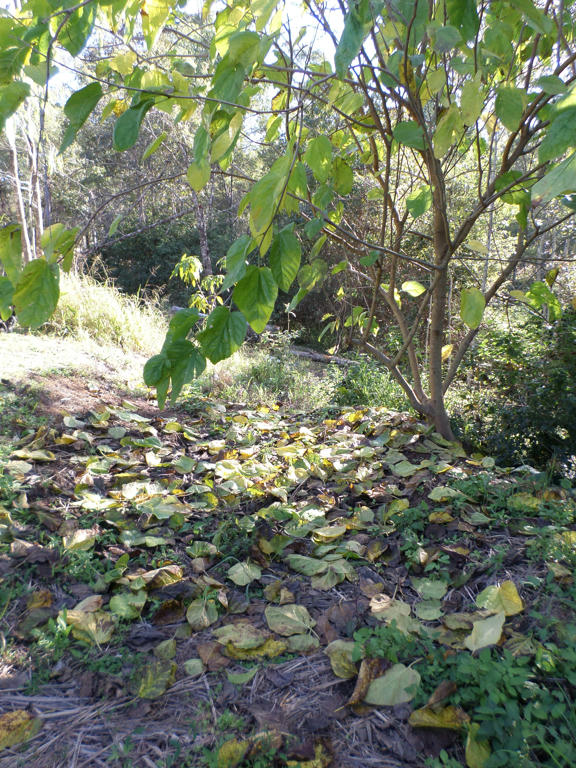
This will be a familiar sight to those in the Northern Hemisphere, at present. Fall. We call it Autumn, in Australia. Whenever the weather turns cooler though, leaves start dropping. Which is no different for the mulberry tree, given it's deciduous nature too. It drops a giant nutrient bomb, every year, on the ground - to help feed the soil.

So the mulberry is a dynamic accumulator, as well as a fruit bearing one. A single tree, with so many functions. I will be happy to list them all at the end.

 My hideaway


This is where I access the mulberry, through all those low hanging branches. I'm actually standing in the swale. I could prune those branches back, making it easier to access - but I prefer the benefit of shade, keeping the soil as moist (and as cool) as possible.
In the heat of the day, under the mulberry is the best place to be. Which is why I recently planted one, up near the permanent chicken coop! Once it gets some size to it (a) the shade will keep the chickens cool (b) keep them protected from wedge tail eagles, flying overhead, and (c) bring a network of bugs to the soil, for them to eat, as well as the bounty of fruit that falls.


Down-side of berm


Back at our most mature mulberry, I have plans to utilise the down slope berm, further. Always evolving this particular design. Because there are so many opportunities to stack functions. At the moment, the lantana downhill is benefiting from the mulberry and swale. Lantana is a weed, we're attempting to remove gradually - as we find something to replace it with.

The very edge of the mulberry's treeline, I hope will be perfect for growing goji berries. I germinated some from seed during winter, and proper placement in this evolving design, could see them bearing fruit successfully, as well.

A tree is not just a tree, on the larger scale. It's potential for expansion, and support for transitional periods - such as I've outlined, in the evolution of our mulberry. Intelligent design, can only continue to evolve. Stacking even more functions together, over time.


Yummy!


Remarkably (if that were not ALREADY enough) a tree can also be valuable medicine. Rich in antioxidants, these mulberries help the immune system fight against infection. My little Mister, is home sick today and wanted strawberries for breakfast. They're all but done for the season, but I had a perfectly productive mulberry tree, just outside. Best to beat the birds to it!

To summarise,a mulberry tree has many stacked functions:

  • Dynamic accumulator
  • Soil stabiliser
  • Earthworks enhancer
  • Overhead shade
  • Air cooler
  • Protection for shrubs
  • Livestock guardian & fodder producer
  • Fruit bearer
  • Medicine

This barely scratches the surface. I haven't even mentioned how trees are natures', original climbing trellis for vines, and also acts as a windbreak for my shade house.

Do you think I should attempt to grow a vine on my mulberry? I was contemplating a passionfruit, but knowing how vigorous those are, they'd cover the goji berries in no time. I don't want to make extra work for myself, keeping the passionfruit in check. Plus I like the fact, the leaves drop in winter, and let the light in. So maybe a deciduous vine?

What are your recommendations/experiences, for a suitable vine under a deciduous tree?


Thursday, June 8, 2017

All grown up

I wanted to pay homage to the process of growing mulch, and using it regularly, to make our valuable plants grow. So it's time to showcase the evolution of a few fortunate specimens.

What I love about blogging, is being able to go back and see, what we started with - right through to where we are, today. So let's start with a blog post I wrote back in 2015, called Prolific as a weed.

In it, I show some tiny, Old-man Saltbush, plants, propagated from cuttings...


March 2015


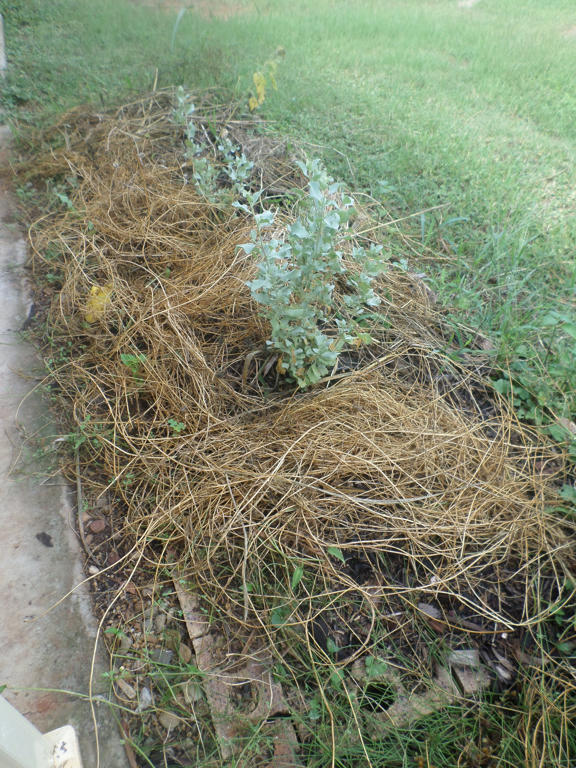
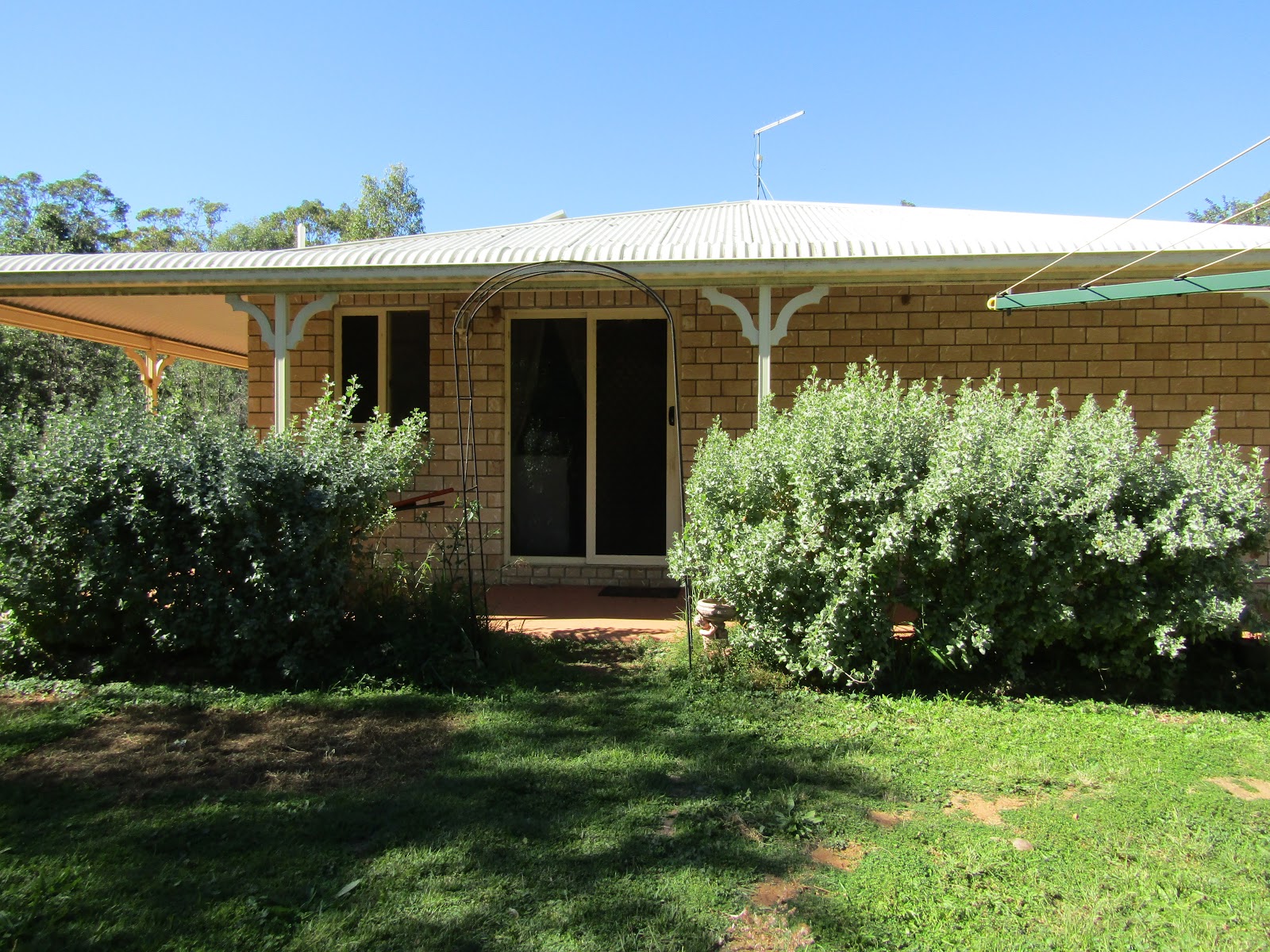
I planted 6 Saltbushes, in total, but I'm only showing three at a time. Because they're broken up with an archway. You can see in the picture above, I've mulched them, with pulled weeds from the same bed. I've done this a lot over the years, but especially when I needed to paint the verandah, recently.

Here is what that same row of Saltbush, looks like, some two years later...


Saltbush and verandah transormation


They seem to do well in this space. So much so, the hedge is in need of a trim. Strong wind, or a lot of rain, could see some of the branches snap off. I guess it can be a bit of a brittle, woody shrub, but only because I prune them.

Normally, their branches would entwine, and it's these gnarly weaving branches, which supports them. Treating it as a hedge means, I have to ensure I always keep them trimmed, so I don't lose branches. More mulch for me though.


Saltbush hedge


I selected Saltbush for this side of the house, because it cops the western sun in the afternoon. It lives off rainfall, and the only thing it requires are those manual hedge trimmers.

Some of the cuttings, go into propagation, a little goes towards mulching the hedge again, - but most get spread around various nearby plants. I can probably get several months coverage of the soil, during winter, and a few months in summer, if rain is about. So it does break down quickly.


 Late 2008


I first broke ground on this western side of the house, back in 2008, with Very lazy, "No dig" beds. Yes, look at all that purchased, uniform mulch. I was starting from scratch though, and decided to plant Sunflowers...


Early 2009


Apparently they did well too - set seed, then attracted the cockatoos. From memory though, I did manage to keep a few large heads of seed, for planting the next year. I also think they got attacked by mould, as I didn't keep them dry. Sunflowers haven't been a mainstay, unfortunately.

For a newly establish bed though, I thought it was a success, and even decided to give it a go as a vegetable area.


Mid 2009


It was kind of successful too, for a very small window of opportunity. As soon as the heat set in, however, everything would bolt to seed. This was an exposed, dry area, due to facing the western sun. Notice the small, uniform wood chips - purchased from the landscape suppliers? You won't see those around here now.

Because I learned this was going to be a challenging area though, I decided to try yet another approach...


January 2010


The Great Shading Experiement, was the very first plant solution, I tried, for actively introducing shade to this particular area. I hadn't given up on it being a convenient vegetable bed, just yet.

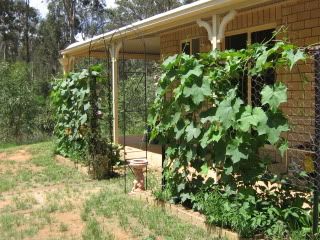
So I tried growing luffa vines, up cheaply made trellises. They were remarkably productive too, but still required a bit of water to keep it that way. As our gardening expanded further into our property, I neglected this area, more and more. Short of installing a permanent irrigation system - I decided to pick the most die-hard plant I could find, and grow it as a hedge.


Six Saltbush, all in a row


Which has been the most successful approach so far. As long as I keep applying those weeds, and it's trimmings, as mulch, I should get quite a few years from this hedge.

I expect at some point, however, it will get woody, and I may lose a plant. So I have to keep propagating them, to ensure I have something to fill the gap.

On to a different location now - the upper, north facing slope, I have found the most challenging to grow...


May 2011


This isn't that spot. It's the temporary nursery, I made out of Middle Ridge chicken coop - but is demonstrating the plant I'm referring to. It's in that clump of large seedlings, to the left. A carob tree.

So I know it's about about six years old (in the ground) as it wasn't planted until  2011.


 July 2014


It goes to show I either had a lot of faith this plant would make it, or no faith at all - as the next time it showed up in a photograph, was 2014. A whole, 3 years later.

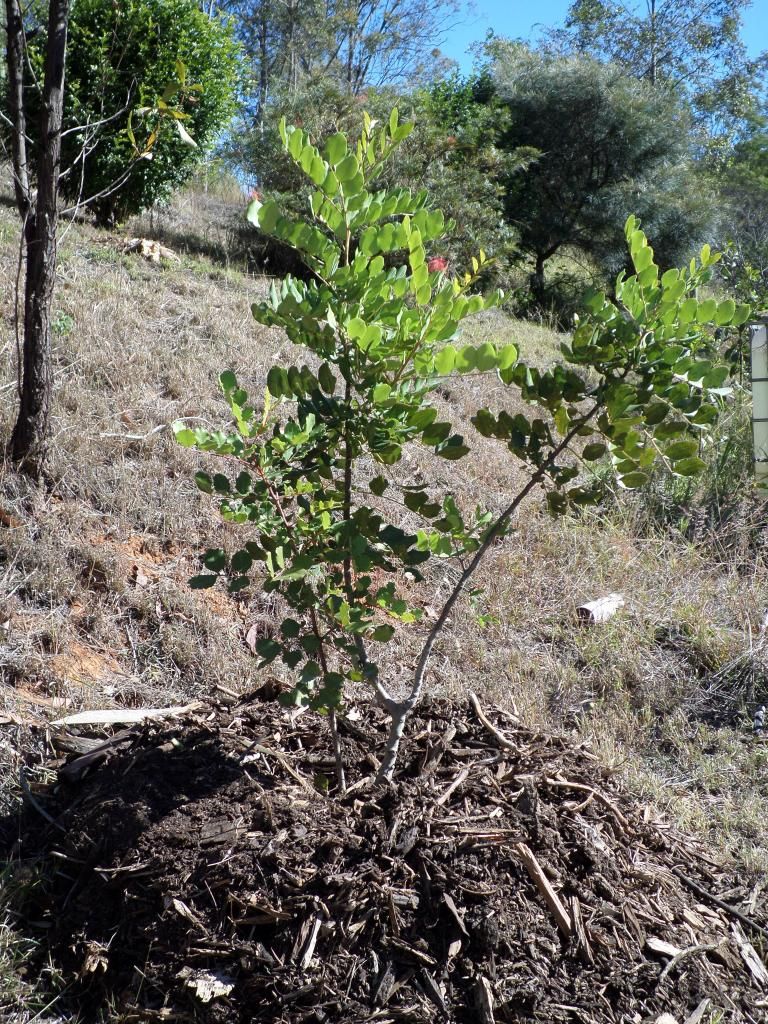
Over the years, I've mulched it with everything I could get my hands on. This particular vintage (above) was bark mulch we once collected for free, from the Toowoomba refuse centre. Since the tip has relocated, and effectively doubled the time it took to collect (40 minutes now) we've stopped.

It was a good thing too, as the finer particles would clump together, and not allow any moisture to penetrate. So not everything that's free, is actually beneficial.


 May 2016


The carob featured again, autumn of last year, as I was out mulching more fruit trees. The post was called Planning ahead, and it showcased my collection of mulching materials again, using what I had available - in this case, a fallen tree or two!

I also managed to toss, what was left of an old pallet and some wattle leaves, around it. This is growing on clay, and my successive mulching, has helped it along.


June 2017


And here is what our carob tree, looks like, as of June 2017. I'm sure if it had a much kinder life of abundant moisture and friable soil, it would be a third, to half size bigger! But I'd rather have a tree growing, than no tree at all. So I have to accept, growing in my conditions, will come with a slower growth rate. It's getting them to live, that's the trick!

In the end however, I still get this...


New pods


...fruit production! The first flush came, at about year 5-6. I didn't put it in the ground straight away, so not sure when it started producing exactly. But it falls within the standard expectation of producing fruit, anywhere from 6-7 years. So I didn't do too badly, for it to start producing on the early side.

This will be it's second round of pod production. It had a pretty good first crop, and the pods tasted nice. Not too sweet and not too bland. I'm attempting to sprout seeds, right now, in hopes I can propagate more of this self-fertile variety.

I would like to be able to dehydrate the next pods, and attempt to make carob powder.


Bamboo - June 2017


I already showed this Bambusa Multiplex, in my last post about Mulching Land. This is what is started from, as a wee baby though...


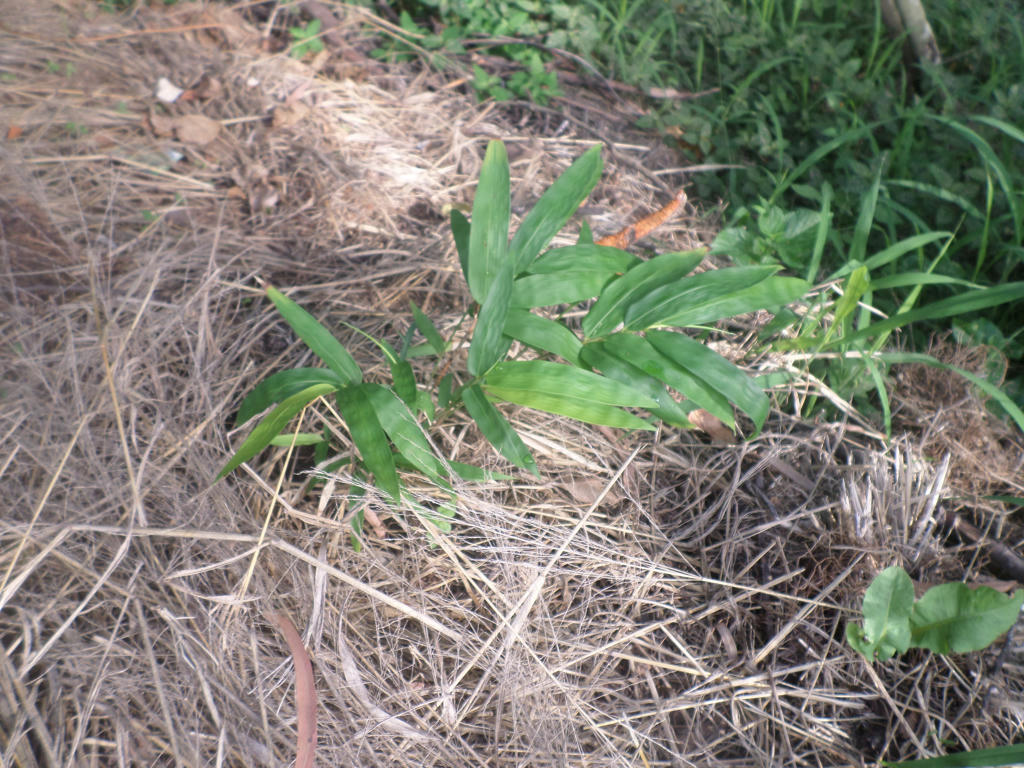
Bamboo - March 2015


Bamboo grows fast, so long as they can hold onto moisture. I have mulched this new seedling with dried grass - something we have plenty of, in the growing season (if the rains arrive).

I'm glad it has done well, considering some bamboo varieties, do better with a lot more moisture available.


January 2011


In my Summer 2011 another season post, I showed several fruit trees I put in the ground. One of which, was a Brazillian Cherry. It also had the unfortunate luck, of being planted on clay.

Thankfully, it's a tough tree, and I moved past mulching with purchased bales (in the picture above) but I had to start somewhere.


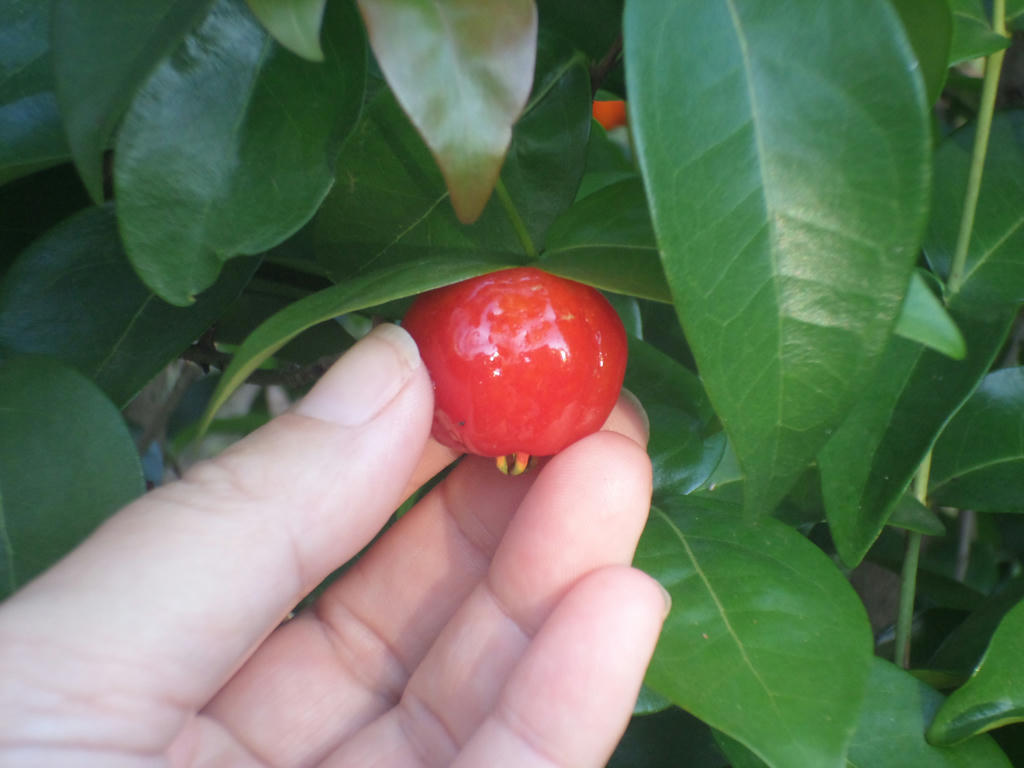
 Fruit


We got our first taste of the fruit in 2015, so it was roughly 4-5 years in the ground for that to happen. I cannot emphasis enough, the importance of selecting hardy varieties of plants, if you're growing in harsh conditions. It really makes all the difference.

Mulching helps, but if the plant you're growing is sensitive to moisture requirements, it's not going to save them. So pick the edibles that will work for your normal conditions.


 April 2016


The next time we saw our Brazillian Cherry, was in 2016, when I wrote about establishing a new plant I propagated from seed. I mulched it with grass clippings, added some old logs, as a semi- retaining wall, and you can even see the Canna Lilies I planted at the side (Yellow King Humbert), as mulching material as well.

I used a bit of sugar can mulch, but only because I was planting a new seedling next to it. I was buying only a couple of bales a year, and if I had some left over, I used it up. But for the most part, it was whatever I could scrounge from the land. I can't see buying bales of anything, now I appreciate what I already have around me.


June 2017 - Brazilian Cherry (right)


Now in 2017, it's gotten to the size, it's blocking the walkway. We didn't get fruit last growing season though, because it didn't rain for months, a heatwave came, and then when the rain finally arrived, it didn't stop. So bees couldn't get out to pollinate. It was just one of those years.

But I'm happy with it's size, considering they grow anywhere from 2-5 metres.


Under the Brazilian Cherry


At the moment, I'm mulching with a lot of coffee grounds, and a lot more woody material. Out of sheer necessity, now the brush turkey's have moved into our area, and love to dig up all our hard work. I can't blame them, it's an easy feast, compared to what the scrub will offer them.

But the heavy wood, means they cannot scratch it back, and our tree gets to stay mulched!


 Mulberry, in full leaf


By far though, our best producing tree would have to be a standard, black, mulberry. They are made to survive extremes, and still put on ridiculous amounts of fruit.

I'm sure we planted it, somewhere between 2009 and 2010, because I have photos back then, of clearing the area. But the earliest image I have of it, is in 2011.


January 2011


I'll say we planted it in 2010, which would make it about a year old, in the above photograph. Mulberries are particularly fast growing, somewhat like passionfruit. Turn your back and it's engulfed something. So it took, no time for it to dominate the area, we set aside.

In the beginning, our Mulberry, really had to contend with some pretty awful conditions...the soil has been scraped back to build our house (2007) and it was dotted with little eucalyptus saplings.


September 2012 - Mulberry, centre


We used those saplings as nursery trees for the Mulberry, in an attempt to reduce evaporation in summer. But our strategy was always to remove the scrub and allow the Mulberry to dominate. The picture above was taken in September 2012. We wanted to use this area more, giving the mulberry more space too.

Of course, our plans are to constantly develop an area. Which often takes years!


March 2015


In 2012 we were clearing more room for the Mulberry, and in 2015, I was digging a new swale to help irrigate it. Ideally, you would plan this stuff out, and build the swale first, but I hadn't even stumbled upon Permaculture design, when we planted the Mulberry.

We're just fortunate, where we first sited it, didn't require us interrupting much...


Digging the swale


When I started digging the swale, we had another Mulberry planted, lower down the gully. So it was somewhat of an experiment, placing the soil, so close to the Mulberry trunk. I wasn't sure if it would cause collar rot, or not - and we'd lose the tree.

Thankfully, nothing bad happened to the Mulberry, and it continued to produce fruit. Being the start of winter, it's perhaps not the best time to photograph a Mulberry Tree, but this is what it looks like today...


June 2017


It's losing it's leaves which makes it a little hard to define, but it's a lot larger than it was, back in 2012! And of course, it's mulched by one of the best soil conditioners around - deciduous leaves. In this case, it's own.

I wrote about mulberry leaves, being a nutrient bomb, back in late June, 2015.


June 2015


It's one of the best reasons to consider planting a deciduous tree in the garden. Here in Australia, with mild winters, we can have evergreens all year round. But having a deciduous tree means, we get a flush of nutrients, dropped on the plants we want to fertilise. No trips to the landscape suppliers necessary. Nature provides it all.

I hope you've enjoyed this short trip down memory lane. It's amazing how quickly the years pass by. At the moment, we're doing more earthworks, which is why it's takes me so long to post anything. Winter is the perfect weather for digging. But new plants have gone into the ground, which I hope survive too.

I should remember to take the camera out and get some more photos, for my next update - in about 5-6 years time.

Do you have a favourite tree or plant that excels in your conditions? Mulberry would have to top my list, with Carob, a close second.