Sunday, August 26, 2018

Footloose

My husband got on stage as Logan/Wolverine, as part of an impromptu dance troop, for Toocon, yesterday. A friend, caught some footage of it, and it was quite the hoot!

If the link works, you'll also see one of the professional Cosplayers, dressed up as Thor, in the background. To the left of David, is a Black Panther, Cosplayer too. Although you only see him for a few seconds.


 I managed to load the photo to my blog, of Logan (aka: David) & Thor,
up on stage together


It was uploaded to Facebook, which is why I don't know if others can view the video footage. Let me know if it works for you, or not?

PS: I changed the link, so I hope it works for you this time, Nanna Chel. Let me know.


Friday, August 24, 2018

A dose of medicine

 Not quite the oranges and lemons ~
of St Clement's


Lemons and limes from our trees, instead. They gave us a crop before they started to curl up their leaves in the drought. Now there is fruit on the ground everywhere. There's only so much we can eat, and preserve, before the tree could hold no more fruit.


 Rindless


Our citrus is pretty hardy, so I'm hopeful they'll recover until the next drop of rain. But I've got to be thankful for what I received, and actually do something with it. There was a part of me that said, "you're too busy", to make marmalade, and "haven't you got enough to do already?"

Absolutely, the temptation was there - as I was constantly nursing family members back to health, at the time. But it niggled at me constantly, the thought of my bare trees, when they did eventually drop all their fruit.


Kumquat Jam


I'm glad to say, I ignored the temptation to ignore the fruit. Actually, it was the trees which inspired me, to fight back my own mortality. If they could hold onto their fruit despite the lack of rain, surely I could muster the strength to do something with them?

So I made marmalade. Albeit, not perfectly. I still need more practice with reaching the gel point. My Lemon, Lime and Ginger marmalade, was too runny, and my Kumquat jam was too thick! But I'm really glad for the practice, and it still has a lovely flavour.


Kent (or JAP - Just A Pumpkin) pumpkin!


Now I have a pumpkin I'm thinking of turning into chutney, next. Recipe found here. I'm nursing myself through my own sickness (thanks family for sharing with me, lol) but part of the healing for me it seems, has been finding ways to overcome, regardless.

My kitchen, and preserving foods I love to eat, is part of my medicine cabinet. Not just the food itself, but the moving of my parts to make it happen. So pumpkin chutney, here I come!

Is there any delicious foods, coming out of your kitchen, lately?


Thursday, August 23, 2018

Desperate measures

It hasn't rained here for months. It's true for many places in Australia. We're all waiting for the heavens to open up again, and if the predictions are correct - we have a high chance of that happening, over the weekend.

What this post is about however, is the reality for the native animals which are always affected too. I notice this, every winter/spring, there's a protracted dry spell. It was made more prominent this particular year, because of a lack of average rainfall throughout autumn/winter. The higher than average winter temps, didn't help either - sucking what moisture there was in the ground, out.


We've been raided...


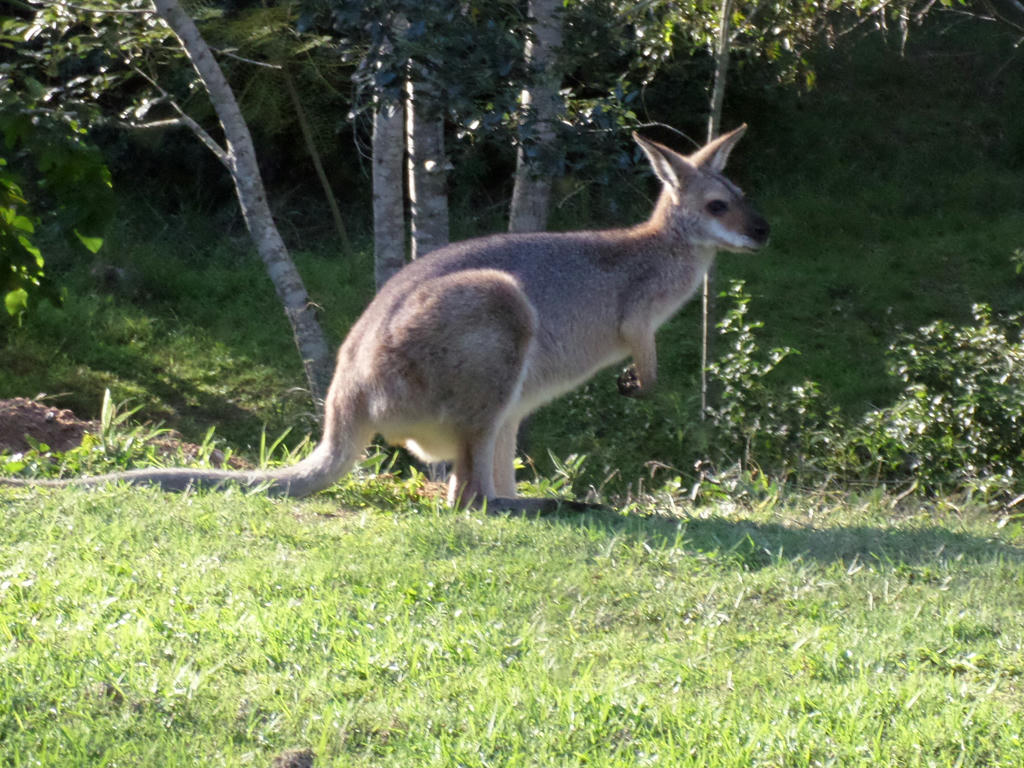
Consequently, there is very little feed around for the native animals. Which means, they invade what we have. This is my shade house, which I can normally leave the door open. The culprit was a kangaroo. Not only can I tell by the scats they left behind, but they also failed to eat the silverbeet they pulled down from the shelf. A hare would have devoured these.

Kangaroos go looking for foods they favour, which is why the first time they took these pots down, they didn't eat them. The second time, they did. Because by then, the food was getting even more scarce.


...and again


The roos raided my shade house several times, before I got in the habit of closing the door again. I'm surprised they didn't take the sweet potato leaves, after having devoured the rest in the garden. I expect they were nervous coming into my shade house (enclosed space) and didn't stay longer than they had to.


Lavender and bromeliads, 2017

Lavender & bromeliads, 2018


What the kangaroos have done this year, which they haven't done before, is take out my bromeliads. Right down to the stub. I hope these will come back. The reason I know it was kangaroos, is how they squashed my lavender plant, with their big feet and long tails. I never knew they ate bromeliads, until this year.

Normally the pigeon pea trees I plant around the place, helps feed the kangaroos through this dry part of the year - but they were already taxing that supply early. The rains failed to green the grass, so they stripped the pigeon peas. A lack of rain has stopped the pigeons peas from growing more leaves. So now the kangaroos are desperate.


Damaged


So much so, disputes are now happening between males, as they're forced to find food in our limited backyard. I came out to feed the chickens one morning, and found the garden arch, had been knocked over.

I didn't know what it was as first - wondering if the wind had blown it down? Upon closer inspection, however, I found two, tell-tale signs, it was male kangaroos.


Exhibit (a)


The bars which slipped into each segment of the archway, were bent. This took a lot of force, to knock the bar out, and bend it at the same time. Which means applied force took the archway down, and, apart.

I managed to put it back together, with the help of some pliers, however it will never be the same again. One of the sides, bends inwards now. Never mind, it's just "stuff" which can be replaced. There was still a mystery to solve, however.


Exhibit (b)


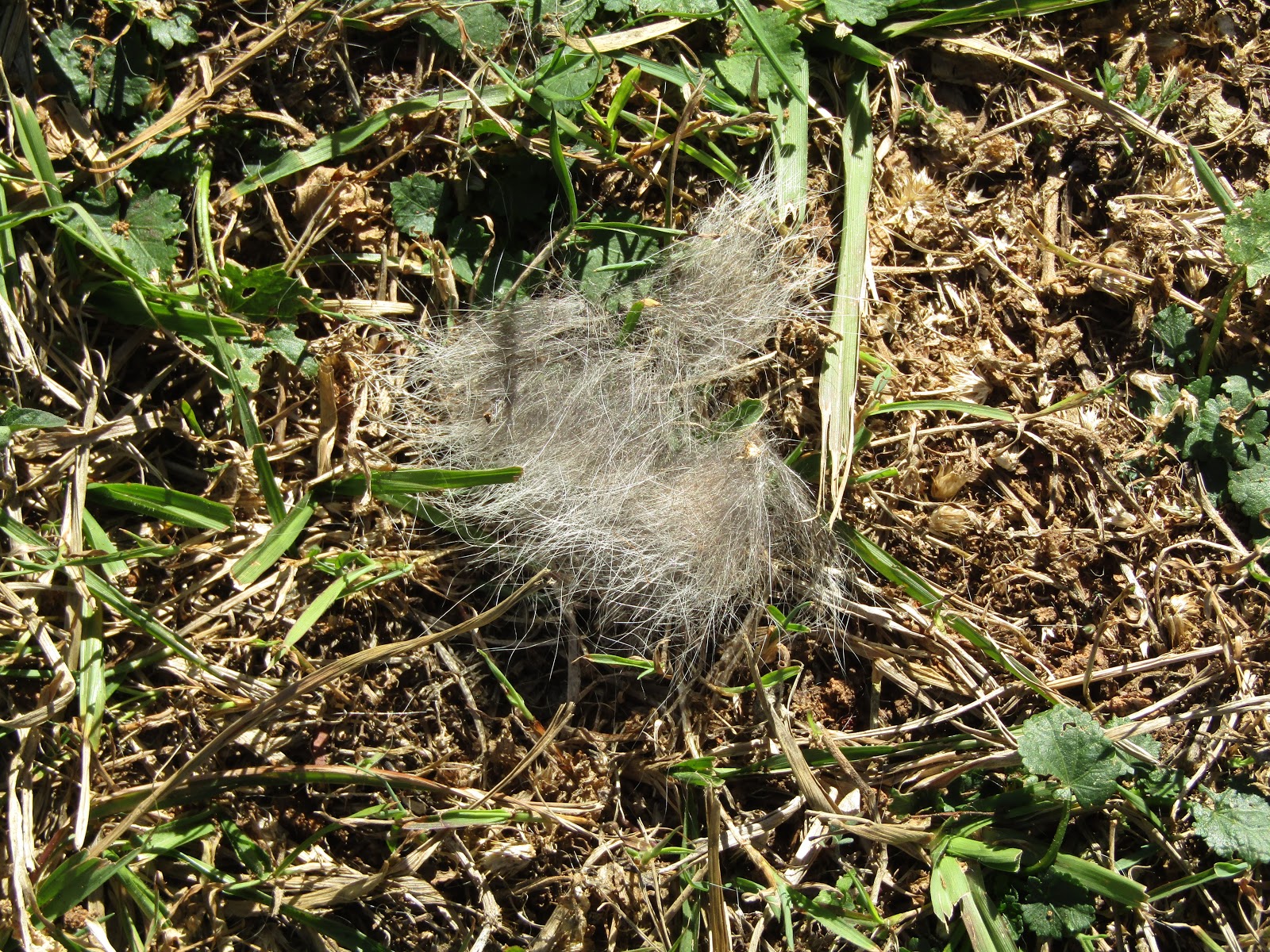
Speckled all over the ground nearby, was grey kangaroo fur. Which confirmed what I already suspected - this was a fight between two male bucks. I have not seen this in our yard before. Normally one big male, owns our yard and we see very few males, otherwise. But now they're in competition for food, and not just females. So we're seeing more males trying to enter our yard to eat.


Male buck


I'm not sure if this was the victor or loser of that particular confrontation, but I spotted him eating the grass we irrigate with grey water, a few days afterwards. It's meant for our chicken, but plenty of native animals take advantage also.

This particular buck, had a half-closed eye - a war wound, perhaps? The kangaroos are in the worse shape, I've ever seen them in the decade living here.  Not just the males, but the females especially.


We all miss the green!


This picture was taken June 2015, from this post - where I wrote about the view from my kitchen window. Notice the green grass in winter, and the joey she's growing in her pouch?

Not this year though. I haven't seen any female kangaroos, sporting baggy pouches. It's part of their biology to naturally terminate a pregnancy in a drought. So even if an egg is fertilised, it won't survive. If there are kangaroo mamma's out there, they aren't visiting our yard.


Click to enlarge


We also found a flock of juvenile King Parrots, taking advantage of the chicken feed, left behind, after moving the chicken tractor. Also a couple of Topknot pigeons. Parrots don't normally like to come down on the ground like this. They much prefer the safety of snacking from a tree limb.

But when in drought, this is what the native wildlife, have to do to survive. Risk being eaten, in order to eat.


Lookout, for the flock, to warn of danger


It's a very different view in cities, where the native wildlife subsist exclusively on the accumulation of resources. The numbers are also reduced, due to heavy competition with humans and infrastructure. Birds and possums have managed to adapt more, to increase their numbers in suburbia though.

All this to say, it's a lot harder where nature is all you've got to subsist off. We haven't got much for the wildlife to share, when it's not growing out there. We've been filling the birdbath daily, and an extra bowl we put at ground level, for the kangaroos. I imagine, if it wasn't for the water, we probably wouldn't be that popular.

So my hope is, the predicted rain comes though this weekend, and gives everything/everyone a hearty drink. 


Tuesday, August 21, 2018

TooCon 2018

There's been a sighting of a Wolverine, on our property


Okay, this is my husband, David. He's practicing Cosplay as Wolverine, for an up and coming event in Toowoomba. Have you heard of TooCon, Pop Culture Festival? It's Toowoomba's answer to Comic-Con. It's a FREE event, coming to our Local Library this Saturday 25 August (9.30am - 8pm).


Toowoomba Regional Council website says:

"TooCon is a family-friendly celebration of cosplay, comics, manga, movies and all things pop culture. The festival celebrates our region's local talent and local businesses, showcases unique geeky goodies and entertainment at the Eclectic Emporium Markets and gives the community a chance to meet well known celebrities and artists working in the comic industry, TV and the cosplay circuit." 


He said he was passing through for the Festival


David will also be doing a talk on the Doctor Who, Toowoomba Local Group, which he use to be the organiser of. He said the festival will be even better than last year, with professional Cosplayers giving tips on how to make awesome costumes.

Don't worry, David isn't as scary as he looks! It's all in the name of fun theatrics. Just pretending for a few hours, to be someone you wouldn't normally be. There are plenty of keen Cosplayers, coming this Saturday. So if you happen to be down town on Saturday, and see a bunch of "themed" costumes, just know it's all in the name of TooCon! Feel free, to join in.

PS: David will be wearing a shirt at the library, lol.


Sunday, August 19, 2018

Kitchen garden in winter?

I had an unintentional blogging break for about a month. We're hanging out for rain, mostly. Then there was the season of sickness, which visited during winter. Thankfully, we've all turned a corner now, and able to get back on the horse for Spring!

Oh, but hasn't Spring been a fickle visitor, this year? It appeared in late July - which for the southern hemisphere, is supposed to be winter. Temps have regularly been 29 degrees Celsius, lately (84F) during the day. Luckily my Kitchen garden isn't struggling. I'm learning more from it, with each change of season.


Kitchen garden, late August


This is the only part of my garden, that gets watered regularly now, so it's economical on our water resources. We're on our last water tank, and if it doesn't rain in the next 2-3 weeks, we'll have to order some water in. It's motivated me to consider more water tanks - specifically for the edible garden, so we don't have to tax our house tanks any more.

In true permaculture fashion, I'm thinking small and slow solutions. So it's going to be a low tech set-up, and much easier to install than our last house tank.


A splash of colour...


I've learned plenty of new things about my kitchen garden, lately. Like, how it's a waste of space to grow ornamental kale. No matter how attractive it looks, it's just not a regular producer. Maybe if I was picking it more, it would be more productive, but then you lose the appeal. It's taken so long, to get any size to the heads anyway. This red ornamental kale, has been the slowest growing plant in my kitchen garden.

So maybe, looks aren't everything...?


Another ornamental kale, going to waste


More than that however, the flavour and texture of ornamental kale, is somewhat lacking. It's leaves are tough, flavourless and take up a lot of space in the pot. Whereas, my curly leaf kale (in my hugelkultur beds, formerly) grew more vertical, and took up less space Especially when picked regularly. Plus the flavour was worth growing it for.

I'll be feeding this kale to the chickens. Which is great news for our feathered friends, but is wasted growing space for our tummies.


New productivity


My plan soon, is to remove ornamental kale from the kitchen garden, and replace with Pink Thai, cherry tomatoes. They're meant to be split resistant too. I germinated seeds on my seedling mat, in the first month of winter. They're now outside, in a large plastic container, so I can close it in, at night. This stops rodents from eating them!

The reason I've selected the cherry tomatoes are, getting more production from the small space it occupies, in a container. Which is what I've learned from my container garden. When growing vegetables, and it's near the back door, make sure the plants are productive ones, you will eat regularly.


Sweet fruits


Strawberries have proven themselves to be very productive in this department too, and act as a living mulch for the container soil. I've yet to learn how long strawberries produce for, in my climate though. In the meantime, new tomato seedlings should do well, planted amongst the strawberries even when they do stop producing.

The strawberries have also proven to be a winner, with the kids - as I hoped they would be! Fortunately, I haven't experienced any problems with birds stealing them. One went missing earlier, but I'm sure it was one of my own little fledglings *wink*.


 Left to right ~ Cos, looseleaf lettuce, & Marvel of Four Seasons


The clear winner though, would have to be the mixed lettuce varieties. Why grow just one? I've enjoyed seeing how they all perform and taste. The looseleaf lettuce, sprawls outwards, while the Cos lettuce grows upwards. The Marvel of Four Seasons variety, is hands down, the tastiest! Although I suspect I will have problems growing that particular variety, during summer. The Cos should be able to continue growing, however.

Lettuce is a living plant, so doesn't lose it's nutritional value the longer I leave it - unlike, the head of lettuce, languishing in the fridge crisper, waiting to be used up! I love that I can leave my lettuce in the pot, and pick it fresh, every time. Best taste and nutritional value! Definitely a keeper in the kitchen garden - weather permitting.


Thyme, basil and oregano


Of course, the herbs are doing exceptionally well - as you would expect them to. In fact, my oregano is threating to overrun the pot, so much so, I'm going to have to prune and dry some soon! The mint (not shown) is also putting out new runners, so really, herbs in pots are clear winners too. I will have to add more parsley though (not enough) and I've germinated some welsh onions (spring onions) seeds, to increase supply as well.

What I can see I will need to address, as the hotter weather moves in, is some kind of shading system. Or these pots will be toast!


To summarise:

  • Remove ornamental kale - poor production & flavour
  • Keep strawberries & lettuce - great production & flavour
  • Add cherry tomatoes - great production & a split-resistant variety
  • Herbs - add more, more & MORE!
  • Overhead shade for summer

Do you have any tips for container gardening, or how to get productive in small spaces, when it comes to growing food?


Wednesday, July 11, 2018

All downhill

In a landscape, meandering with gullies, it's easy to believe the forces of water can be somewhat destructive. And they can be! True to the natural sequences, Peter Andrews, outlines in his book, "Back from the Brink", however, I see other forces of nature at work too.

Within this eroding gully, forged by water, plants are playing their integral part. Over the years, tree roots from the formidable eucalyptus trees, have been uncovered by soil erosion. They cling to the soil in a last-ditch effort, to turn the tide in their favour again.


Right now, you can see the detritus (leaves) which have fallen to the ground. In winter we don't normally get a lot of rain, so the trees shed their leaves. For many months, they accumulate on the gully floor, waiting for the next storm season to arrive, in summer.


When the rain arrives in earnest, to collect water in the gully again, all that tree detritus will get caught in the tree roots as the water escapes. It slows the water, and filters nutrients, every time it rains.

The floods in 2011 (no doubt) brought down those rocks, wedged against the tree root. Which also acts as a natural barrier to catch tree detritus - but allows water to permeate through, with less soil erosion.


All those natural sequences, led to one essential repairing mechanism in the landscape. Silt accumulation. Those exposed tree roots, are now halting erosion - creating a series of steps on the upper landscape instead. Which is one way to reverse deep gullies, getting deeper, the faster water travels downhill.

I actually took note of this relationship between the tree roots and water flow, when I went scouting for rocks, recently. We're building our drystone retaining wall, and need more backfill.

Seeing how valuable these rocks have been, in repairing the gully, however, I wasn't about to remove them! It goes to show, even in a degraded landscape, such as ours', nature is diligently forging a repair schedule. Ergo, trees are absolutely essential on a sloped landscape!

What natural sequences, have you discovered happening in your backyard?


Monday, July 2, 2018

REAL land life - neighbours

We've been fortunate, no matter where we lived, to reside near excellent neighbours. At Gully Grove, over the past decade, has been no exception either. There were the rare few, which - because of their actions, have raised subsequent issues for us to deal with. However, they were willing to make amends and work with us, on solutions. All except one family, but I consider them the rare exception.

I needed that disclaimer, because my desire is to avoid a rant about "bad" neighbours. I haven't really had any. Not truly bad neighbours. This post is about neighbours in relation to your land, however, and how their actions can affect what approach you adopt.


Work continues, on our drystone retaining wall


We were the last to purchase land from the developer. Both our next-door neighbours, purchased their land about a year ahead of us. They seemed to be a decade older, too. We were the young couple with a new family. We all got on well. Neighbours were regarded when they needed help, or when it came to having things like roosters and dogs. We chose to discuss with each other, what we were personally doing, to keep open dialogue and discus any negative impacts.

But then one original owner, sold about a year after we moved in. That particular location, is now on it's second set of new neighbours. The other (original owner) just sold recently. We met the new neighbours, after their 3 enormous great Danes, wondered into our yard, and started to harass our chickens.

Which brings me to what changes have occurred on our land, due to our neighbours.

  • How water flows downstream. We love it when neighbours want to hold water back, especially upstream. However, they have to do it right, or risk increasing erosion on their neighbour's land, should their efforts fail. 

  • Earthworks. Moving earth requires a degree of knowledge, so as not to cause land slips or funnel water onto neighbouring properties. Consider potential dam sites, should they burst and effect your infrastructure.

  • Noise pollution. Music, machinery, motorbikes, fighting cats and barking dogs.

  • Reduced wildlife populations. Noise pollution, and increased carnivore load, has impacted the native wildlife, present on our land. The numbers have reduced, in direct proportion with other people's domestic animals increasing. Which means less diversity migrating to our landscape, and leaving beneficial fertility behind.

  • Loss of greenery and natural sequences. The more people who move here, the more changes the shared landscape, has to carry. Water pathways are interrupted, and increased infrastructure, creates more water run-off. Running water is an eroding force. So natural sequences are more out of balance - sequences, vital to establishing greenery and providing stability in the landscape.

So, even when your neighbours are decent people, don't be surprised when they impact your landscape. So consider in your property design, vulnerable areas between you and your neighbours. Especially anything that runs upstream, from you. Whether water, or earth displacement, or their wandering animals, consider how you may have to change how you're managing your landscape, to compensate.


 Visiting, male King Parrot


Also, don't be surprised if your neighbours change hands, multiple times. So you're left with a mishmash of ideas, no-one stuck around to see if they worked. It will impact your landscape too. So if moving to the country, means peace and tranquility - be sure to buy more land than five acres. Because larger parcels of land, have fewer neighbours to develop the shared landscape. Be aware however, the larger parcel of land, the more responsibility involved in managing it (for you).

Ironically, we came here for peace, tranquility, native wildlife and distance from over-development. That has changed over the years. We simply have to make the best of the situation, we can. But if you're in a position of setting up (on however many acres) consider your neighbour placement, and how you can design your property for a change of guard(s).

This can be done by:

  • Note the sensitive areas between neighbours - upstream and downstream. Avoid infrastructure development, in those areas. Designate those sensitive areas, as "sacrificial" zones. So when change occurs, it won't impact your hard work.

  • Correct house placement in relation to all neighbours. Regardless how nice they may be, neighbours can change hands, or have a change of heart, with former agreements

  • Access roads, or easements which may be mandated on your land - avoid development in those areas, at the very least. Avoid purchasing land with those existing entitlements, altogether. It's will test relations, if neighbours, or third parties with interests on those roads and easements, decide to take advantage - and it effects your operation.

  • Site house and infrastructure, as far away as possible, from property boundaries. So neighbour development cannot encroach on solar access, privacy, or risk damaging structures on your property, should any trees on their side of the fence, fall.

  • Even on acreage, site your house where it can be shielded on all sides from: noise pollution, wind and water; all entering from neighbouring properties.

This list is not about avoiding neighbours, its more about sensible planning for permanence, in the face of change that will occur. There is nothing more permanent than your house, and hopefully, your land. So plan with these things in mind. Because you cannot "undo" infrastructure placement, once they start building around you.