Thursday, February 20, 2014

Natural foods

Despite the inhospitable environment we try to grow European type foods in, there is nonetheless an abundance of natural foods growing around us.


early morning blooms


We have two small (coppice) eucalyptus trees in full bloom near the water tank. Because they're coppiced - happened when the earthworks to build the house, cleared the area, and they grew back - but their trunks are shorter, so we can see the flowers closer to ground level.


branches dripping with nectar


While we don't eat these abundant blooms, if we kept bees, we'd sure be self-sufficient in honey. But the Rainbow Lorrikeets and Fruit Bats love to gorge themselves on the blooms. We hear the bats at night, but they (thankfully) don't squabble much. Plus they're kind enough to avoid hitting the car parked nearby, with their bat scats.

The blooms smell incredibly sweet, and its no wonder it draws all the nectar feeding animals like a magnet. It's quite the feeding station, early in the morning and again at dusk.


loves the concrete near the house


Another plant which springs-up voluntarily near the house, is purslane. It's a native herb ground cover, which is also somewhat of a super food. It contains more omega-3 fatty acids, than any other leafy vegetable you could consume. It seems to be doing really well this year, with more of them popping up, so I may just add some to my scrabbled eggs. Our guinea pigs get pickings most of the time too. I wonder if that's why they've lived such a long life?

I do love the eucalyptus blooms however - it will be sad to see them stop, along with the regular animal visitors. But it's nice to know, even in an inhospitable environment like ours, there are some things doing exceptionally well without our input.


Friday, February 14, 2014

Hello civilization

I say this with some giddy exuberance, but we have been working on something which will bring us back in line with the rest of civilization. I am of course, referring to "roads".

Our driveway, oh boy, is something we've lived with for six years. It's like Dr Jeckle and Mr Hyde. Half is perfectly presentable, the other half is somewhat of a monster to navigate. The dirt ruts are so bad, I've had my car exhaust-pipe welded back together, twice!


The big dipper


The driveway climbs a slope that needs some traction, and dirt inevitably travels down hill. We had the funds to have the front section of our driveway concreted by professionals, before we moved in six years ago - but the latter was a little project we always meant to finish ourselves. Settling on the design was the main issue. We learned with concrete, that rainwater travels down the slope very quickly. We weren't in a hurry to start pouring concrete again.


Driveway solution


In the end, we decided on turf stones, which is a concrete grid paver. It allows the water through, dispersing the energy, so water doesn't travel fast. We had two pallets of pavers delivered and starting to lay them. They will be filled with stones to help with drainage.

The main job we've been working on is the concrete stop, which will butt the pavers and prevent them from travelling down hill too. We could install wooden stakes through the grids (and may yet do this) but we wanted a concrete stop at the bottom of the slope, all the same.


Rebar leftovers, surplus to house build


We installed the form-work on Tuesday and started pouring cement the next day! A work colleague of David's loaned us a cement mixer. It was a lovely stroke of luck, that was until we tried using it. Bolts were undone, fan belts were loose and the drive wheel wasn't attached properly. Thanks to David's mechanical sleuthing, we had it fixed within an hour. Then it took 2 more hours to finish pouring the cement. We're still very grateful for the loaner.


Drive wheel fitted and secured properly


How is it that I'm so stoked about a road though? Here in the Lockyer Valley, our rain events tend to be hard and fast. Add a hill to that, and in no-time there is, a la', erosion. I don't like erosion, I need the land to stay put. But things like access roads are an intrusion on nature, and poorly designed ones can really cause damage. That's why we procrastinated so long on the design. We wanted something that would counter the energy caused by installing a hard surface driveway. The grid pavers should achieve that.


Six courses laid


We're pretty chuffed with our progress to date. The worst part (the concreting) is over. I'm glad we can put it behind us now. David and I worked diligently as a team, and our daughter was able to keep her little brother entertained (just). Thank goodness we can almost mark off another project from our list. As you can tell, we're not in a hurry - six years is a long time to finish a driveway.

We hope to catch-up on all those projects we put aside to have our baby recently. Which reminds me of a funny story (at the time it wasn't) but going up the driveway, when I was in full labour, was no picnic. The joys of being a hard-working, money poor couple. Our baby arrived safely, and we can now marvel at the soon-to-be finished driveway!

All roads may lead to Rome, but I'll just settle for the 30 metres to our house...hello civilization.


Wednesday, February 5, 2014

Friends with chaos

I've been away from my blog while getting our daughter back into the swing of school again. I've also been chipping away at something I've decided to challenge myself with this year. I'm de-cluttering years of our life in an attempt to simplify. It's not just because my life will be easier keeping things tidy, but bush fires and the real threat they are here, were a factor in my decision too.

If I had to look at our possessions in the blink of an eye and only take what was important, it would be us, the cat, and our insurance papers. Everything else is replaceable. So with that in mind, I decided to evaluate everything in the house.


Our cat, "Muesli"


The process has been a sobering experience and not at all like what I was expecting. I'm not a hoarder, nor am I particularly precious about material items, yet when I asked what I would specifically rescue from a bush fire, I became quite agitated. I spent several days procrastinating, in an attempt to avoid those feelings. I thought I was overwhelmed by the size of the task, so narrowed the process down to the small home office instead.

It soon occurred to me, I would have to invade other parts of the house to accomplish this simple task. The bookcase I wanted to rearrange, had a messy kitty-litter tray nearby. I needed to find a new home for the tray - somewhere that wouldn't mind collecting dust from the litter. I removed a laundry basket from an out of the way corner, and placed it in the middle of the room - for want of finding a suitable place for it (yet) and the litter tray took its place.


Temporary home for the laundry
~stuff for thrift-shop in background


When I finally got to tackling the bookcase, I came across documents and pamphlets that were now redundant. I cleared an entire paper organiser worth of it. There was a stack of pamphlets from initial research on our retaining walls. Very handy when they were needed, but we had finished that particular project in 2010. There were also some old journals of mine too, but the ponderings I read about were mostly resolved now. I had to wonder why I was still storing them? In a bushfire, they could burn and I wouldn't miss them.


Another gift for the thrift-store


And that was the biggest revelation of all I think...how did my space become so full of redundant material? Time was incredibly precious in the present, with kids, marriage and relevant work to complete today, and I was spending large blocks of time, dealing with material which had no purpose beyond marking the past. I even had to sort the shoes growing mould for lack of use, and these were items we used in the present - or didn't use, to be more accurate.


Shoe tree sorted


Most people engage in simplifying their lives to be happier - and I guess that's the end result. But the process involves embracing a lot of discomfort first. It's not a lot of fun, going through your possessions and finding a lot of idleness and redundancy in them. A lot of what I stored for "later", really just accumulated as a talisman for later. Even if I had all the time in the world, I still probably couldn't get around to using it all.

That's because the human imagination is limitless, but our ability to work dreams into being, is not.

After my brief foray into chaos recently, I managed to clear one cupboard completely. Now I can place my hands on everything needed in the office, because it's simpler, smaller and relevant to now. There is still some organising to do, but I've made a considerable start.


Bookcase now holds gear from cupboard next door
with a shelf to spare!


I'm looking forward to approaching the rest of the house with my new friend, "discomfort". It needs to stay for a little while longer, to make our spaces less cluttered with ideas, and more useful for doing things. It's not the easiest task I've set myself, but its extremely worthwhile to pursue this year.

So if I seem to go AWOL from blogging, you'll know why. I will update as time permits.


Monday, January 20, 2014

Guest post

I wrote a guest post at Farmer's Liz, Eight acres, because it was about a subject close to my heart. Permaculture endeavours to translate the natural environment into our culture, so that we don't live separate to the natural systems which sustain us.


Pumpkin, grown and picked above this wall


The very fact we can breathe, is thanks to the natural systems which have been quietly working in the background. Permaculture and its principles, tries to interpret that system into our every day being. Whether we live on acreage, or whether we live urban, permaculture has a design solution for any location.

I apologise for getting this post up so late. Feel free to comment should you wish to discus our permaculture experience - or indeed, your own. I would very much like to hear about it.


Sunday, January 19, 2014

Now is the time to...

Life has been pretty intense for our family of late. Full of mundane and important stuff, equally, but we needed a day together to remind us that family means contentment too. So we left our acreage and went to town to visit the park.


Thank you tree


There are many parks in Toowoomba, it is the garden city after all. We like to visit the parks in town for all the wonderful walking paths, shaded by mature trees. Sarah took her scooter, Peter got the pram and mum and dad walked side by side, admiring the many wonderful plants.

We sat on a rug, under the shade of the tree above - and plenty of cuddles were to be shared.


Kids love the park


There was food and cool drinks for rumbling tummies. We ate at the picnic table and had time to spy shoes....


Doc Martin framed by concrete


It's was interesting being down on the ground, seeing from Peter's point of view. He had fun crawling on the rug, and then decided shoes were intriguing (especially dad's) because they had tags on the back.


What's this?


We even got to spy some of the resident wildlife, which thought people meant food. We made sure he didn't develop a diet for people food though, and he soon went to the trees to find an easier meal. A very polite fellow as far as Magpies go.


Hello friend


Peter thought mum was a tree he could climb for a moment, if only to see that clicking device, she kept pointing at everything. I wanted to remember our day though, just being a family, doing what we do.


Peekaboo


Then we went back home and spent a few hours in the small pool, watched a DVD (Think Global, act Rural) and made some fried rice for dinner - because it's so quick to make!

Sometimes the most powerful moments in your life, are the ones you make time for. They will be your memories into adulthood and then, when old age appears, they will be what you look back on as important. Life is not always easy, but then there are times it can be amazing too. We need to connect more with the people, animals and "being" around us, so that we are conscious of what's important.

When we forget, we wonder what we're doing here. There are plenty of reminders around us though. The trees which have lived longer than we have...the animals which live in the trees...the curious look of a developing child, pondering the next thing to be explored...a cool breeze...a stranger you greet with hello, because you happen to be passing...and what's for dinner?

These are our days of being...do you remember yours?


Wednesday, January 15, 2014

Pleased


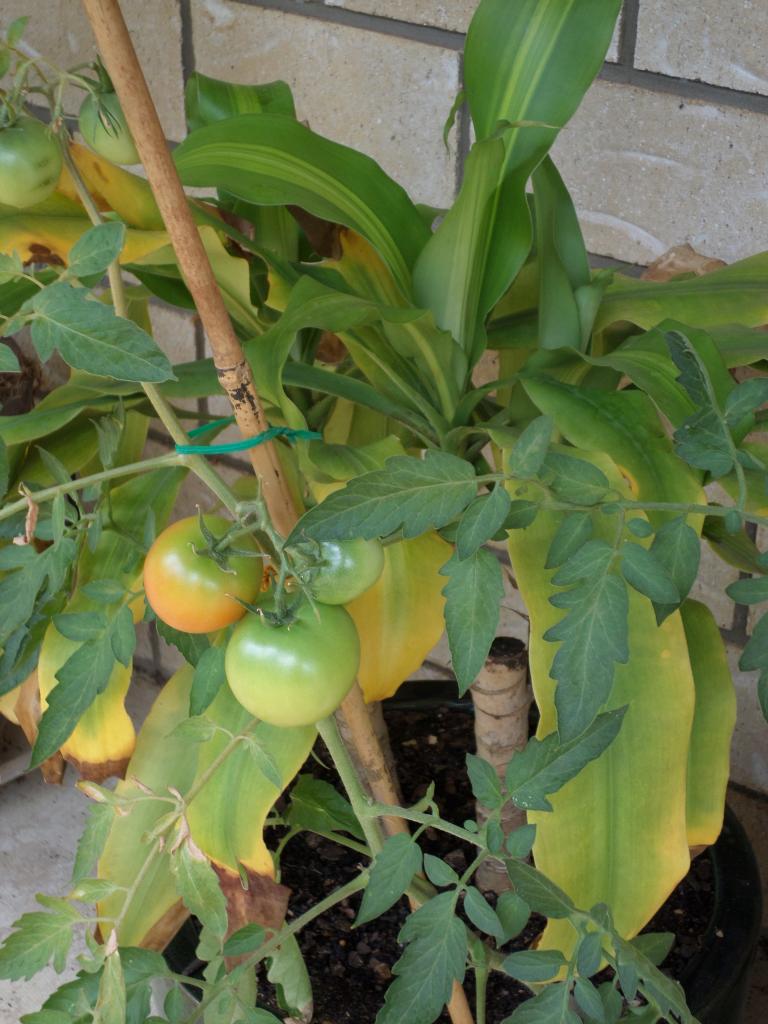
I am thrilled to see my rogue tomatoes, which sprung up in a pot on the verandah, are finally ripening.

Not bad considering they share limited space with a mature Happy Plant. It won't be long until I get to taste them. I actually don't like tomatoes, unless they are home grown.

There was hardly any effort put into this on my part. I only staked it once they started to lean and block the walkway. A bit of water, potting mix and afternoon sun (the only time the verandah lets it in) and we'll have five ripe tomotoes to remind us, why we do what we do.

Friday, January 10, 2014

Where else but...?

Welcome to a new year! I was going to write about the things I wanted to accomplish in 2014, but decided to post what I was doing instead. And where else would I be, but the garden of course? It has endured some scorching heat recently (up to 44 degrees celcius). While I was a little worried about the garden, it was also an opportunity to test how our gardening strategies were going.


Newly mulched box hedge


Before I get to that however, I resurrected our box-hedge from the infestation of weeds around the septic tank recently. I like weeds and I try to live with them, but not when they're stunting the growth of other plants. This particular garden bed gets very little attention, so it has to cope on its own for the most part. Surprisingly, it's quite abundant (even in extremes) due to a few strategies, which are completely natural. If you notice the miniature fence in the image above, its to stop kangaroos crushing the growing plants.


Fresh roo-poo


Kangaroos leave little bundles of nutrients in their droppings, wherever they go. When we plant a new garden bed, we try to leave a little space for a kangaroo track. This particular garden bed is near a large tree - quite a magnet for kangaroos. By placing small barriers on the plants we don't want them to crush, but leave a more open space for them to meander, we get regular fertility compliments of the kangaroos. And fertility means, better soils which do much better in climate extremes.

So our first strategy has been to invite native animals into our garden, to be part of the nutrient cycle. Nature already put them into the landscape - we just had to accept their value and work our plans into that existing process.


Acacia tree (left) Small Frangipani (right)


If there is anything lacking on acreage, it's generally TREES. This large tree is the one I was referring to earlier. The septic tank is on the right. We were fortunate this acacia (left) sprung up on its own, and quickly grew into a wonderful canopy tree. It's wonderful, because canopy trees are nature's air-conditioners and escape from the heat. This tree has sheltered quite a few plants underneath it too.


Evolving landscape


I'm not sure if my garden will ever be "lush", but its beautiful watching it develop through the seasonal cycles. This cycad (front and centre) has been covered in weeds when it was a wee nipper too! It even got covered in the leaves and flowers shed from the acacia tree. When the cycad was young, it could've been overrun by so many natural elements, but instead it created a network of resilience for it to grow through.

If you notice in the picture, there's some old felled tree logs too. We don't believe in burning to rid ourselves of dead wood, because it only deprives the soil microbes, insects and lizards a place to take up residence. We deliberately placed those logs there, to stop soil erosion and capture moisture. Any insects which die under the log, will fertilise the cycad lower down.

So our second gardening strategy, has been to really use the life and death of plants to capture natural elements, in order to grow healthy soil. There's quite a lot involved in how you can use a plant while it's alive, and once it is dead. But the main thing is not to devalue what you have. Use it in the landscape instead - that is why nature put it there to begin with. The minute you find yourself asking, "how can I get rid of this", change your thought process to...how can I "use" this instead?


Tree debris


Talk about using what you have, I truly get to appreciate the amount of debris that falls from our canopy tree, when I have to sweep off the top of the septic tank. And it all goes back onto the garden too.

What did I do with the weeds I pulled? I placed them in a heap, near where they were pulled. The reason the weeds are growing there, is nature's attempt to correct the minerals in the soils. By pulling the weeds and placing them nearby, I'm not breaking the natural cycle. Those minerals the weeds specialise in harvesting, are returning to the soil. If I cart those weeds away, I only have to bring something else in, to correct the imbalance. Who needs that extra burden, when you're gardening on acreage?


Close-up view of acacia


Everything must return to the soil eventually. Even our wonderful canopy tree that has served this area immensely, is decaying. We have found a seedling which has sprung up nearby (only a few metres away) and it will replace this monolith of fertility one day. We will use it's gnarly trunk in the very garden bed it has brought to fruition. No doubt, we will build another track for the kangaroos to meander around, and plant more plants in the residue of its decay.

When you're gardening on acreage, your best friend is a tree. Or should I say...trees! And don't forget the animals need a place to live too.

We are in the process of having to take a few trees out - we're pushing our human boundaries further into the landscape. But we have learned to balance the equation by inclusion. We use the elements which are already here, and cater for them to continue.

Have you stumbled across some natural gardening tips that work for your particular area?