Friday, April 15, 2016

Establishing plants

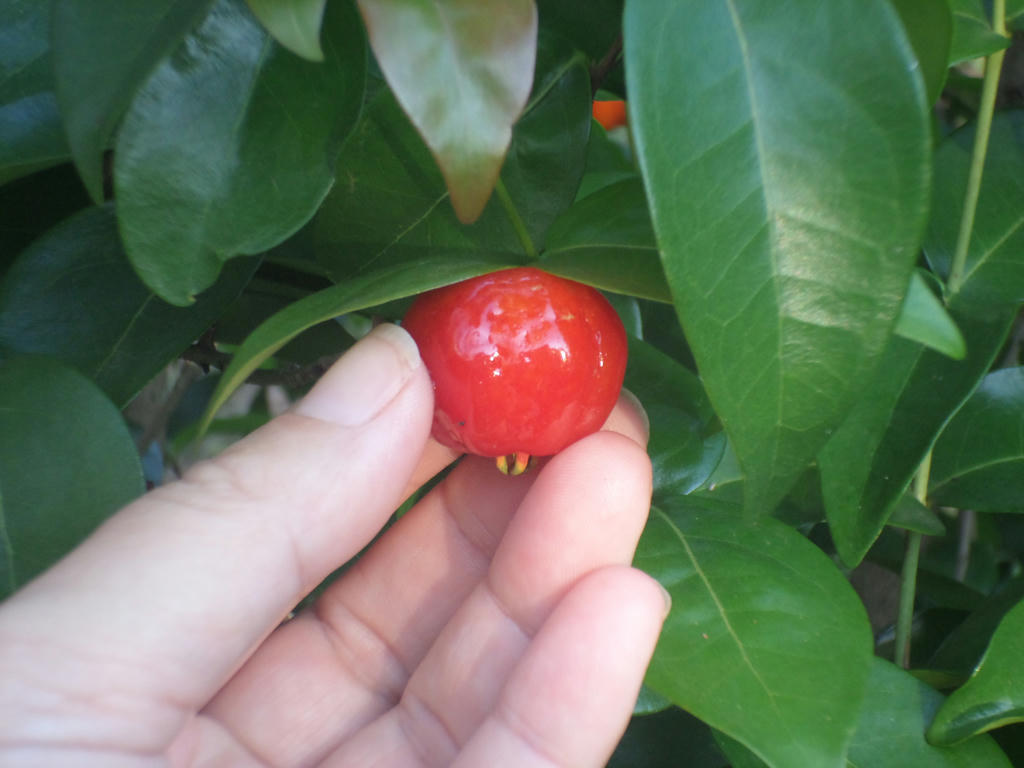
We have a lone Brazilian cherry, which has managed to survive an incredible amount of neglect. We ate a decent amount of fruit last year, for such a small tree (more of a shrub) and its been in the ground, roughly 5 years.


November 2015


It's been declared a weed in the coastal regions of Queensland, but I believe the rest of the States in Australia have unsuitable climates for it to thrive. We are slightly inland from the coastal regions, and it has not presented a problem here. It doesn't get wet enough for the seedlings to survive, as I've experimented with planting the seed myself.

They can germinate from the seed, easily, but where they're vulnerable is needing shade and moisture, while establishing. Our original plant, was purchased from a nursery, so it was at least 18 months old when it had to fend for itself.

But if you are worried about it being a weed in your location, I have a link with suitable native substitutes. I've given Lilly Pillies a try (as suggested via the website) but they're very short lived here. We don't get the reliable moisture they need for longevity. So make your decision, based on what climate factors are at play.


 Brazilian Cherry ~ April 2016


I'm not a fan of calling any plant a "weed" though, because nature will always fill a niche with the plant that suits best. If its edible, even better! They may well feed people, if it ever came to famine like situations again. My edible weeds are my insurance, whenever our managed edible systems fails. And they do. Quite often.

But I'm not too concerned this location, can make Brazilian cherry a weed. As I unsuccessfully tried to plant out a seedling (germinated from seed) last spring. It died by summers end. I decided to try again though, with a little more assistance on my part. Planting in autumn was one strategy. As it gives roots a chance to spread with the still warm soil, but without the extremes of summer plaguing it.


It's location, was going to be next to the parent tree, so I had to do something about the clay soil and the slight slope. Which is where my recent hugelkultur bed making, came in handy. As it turned up a decent supply of ageing wood around the place.

Having wood covering the soil, helps shade the western sun from drying it out. Especially, next summer. But it also allows for soil microbes, fungi and insects a place to hang out too, and hopefully start transforming the soil to a more friable consistency. The logs assisted in raising the soil level up, so I could add more compost behind it, at the time of planting.

There's also a brick in this crude creation, because it was there and filled the niche nicely! It will provide insects another place of habitation. Insects love to live under hard surfaces, such as rocks and bricks. What seems like a messy, insignificant structure though, is going to provide the means to improve the soil, and that's what I want.


 Hardwood, ironbark log


More about how insects help transform the soil, and this time, one with a bit of a bad reputation. Termites! They are a home owners' worst nightmare, if they ever get into your house. But they really just want to do one thing. Eat! Actually, two things. Eat and reproduce, but that's their job in nature. They consume wood, and reproduce, so their offspring can consume more wood. The above image demonstrates why.

Without the use of a petrol driven wood-chipper, termites have managed to turn a piece of hardwood into weak, paper-like, fibre. Bad for a house, but extremely good if you want to naturally decompose carbon and turn it into soil. Once the termites move out, the microbes in the soil have a better time, breaking down what's left. Giving friable humus at the end. A supremely better soil for growing plants in.

While some people may fear the termite (and rightly so, if they haven't got anything in the environment to eat, but the house) our particular location of depleted soils, which can only grow hardwood trees, actually needs them.


I used a lot of this wonderful, termite eaten wood, as backfill, in my retaining wall. But I also collected it with some mulberry leaves, which have fallen on the ground, and starting to decompose. I'm hopeful they've been colonised with the microbes and fungus under the mulberry tree, so they can start working in the soil of my new planting area.


I planted the new seedling in a hole, I've improved with compost. This compost was made from all our waste products, including egg shells from our chickens. So it will receive a dose of calcium for a little while. But the fine tilth is perfect for new roots to start developing in. It will have approximately nine months to get roots down, before the next summer arrives, so it better make the most of it.


Next, I spread the bits of decomposing wood and mulberry leaves, around the new seedling. By adding material from other parts of the garden, it will introduce new, beneficial soil organisms. It was like giving the new seedling a welcoming gift, as they moved from the container, to my garden. Some transitions are made easier with a welcoming gift.


I topped it all off, with a cover of sugar-cane mulch and a can of water. Making sure to wet the logs as well. That way, this small and messy system, can get to work, improving soil conditions for the new plant sooner. Those logs might not be there in a few years time, after decomposing, but that's all part of the plan really.

Rather than having logs sitting on top of grass, and becoming potential tripping hazards, I can move them to where they will benefit my edible plants instead. And in creating habitat for my soil microbes and other beneficial fungi and insects, the plants, ultimately receives the benefit.

Because I no longer believe, a plant can survive if its given compost and water, at planting time. Even with adequate water during its establishing years, that little bit of compost at the beginning, isn't going to last very long. It needs active life in the soil, to continue feeding it. Sometimes you'll forget to water or you won't have enough compost to go around, saving it for the new plants instead. Only to find a few years in, your plant ultimately didn't make it.

My experience gardening, in unforgiving conditions, has been to build systems that will continue working, long after I've been distracted by another project in the yard. My plants live longer that way.

Tuesday, April 12, 2016

New look

With the change of season, it was time to change my blog too. New things added, here and there. Small things. You may not even notice them. They're not really meant to be noticed either. But I mostly wanted to direct you to "Our mission", page, under the header.

It's short and simple, but its something we believe in, and ought to keep remembering. Do you have a mission statement in relation to where you live, or how you live?

Sunday, April 10, 2016

Hugelkultur bananas

Our journey into Hugelkultur bananas, started back in late 2015, when we built our last retaining wall. It was to aid our veggie beds, but we also had casualties as a result. Bananas down. Many, bananas.


December 2015


We managed to save seven suckers from the fallout. They went on to live in various containers, and develop large root systems, until it became apparent, if they weren't relocated soon, we would probably start losing them.

Enter the quest for where to plant them? And more importantly, how? Because while we knew our bananas could give a crop with very little attention, it was always an impoverished one. They needed something more, than just soil and sporadic rain. It was then I stumbled across Hugelkultur beds.

I don't know why I didn't cotton onto this idea, like a religious zealot, beforehand. Because we have no end of wood supply in the bush. We don't want it to become a fire hazard, but neither do we want to burn it off either. So our problem, became our solution. This readily available/free resource, is PERFECT for Hugelkultur. It puts carbon back into the soil, so it can grow carbon again - in this case, bananas!

With the how answered, the next question became where would we build one?


Overgrown, narrow strip


We originally considered a place, lower down in the gully, but somewhere else caught our attention first. The area behind our only garden shed, was poorly neglected. It grew tall grass and probably sheltered many a snake. But when David dumped the banana tree trunks behind it, from our retaining wall project, we discovered something amazing, several months later...


 What do we have here?


The banana trunks, which were in contact with the soil, started to throw more suckers up. Nature was telling us, this was the place we were looking for. It also meant the possibility of shading the back of our shed too, from the western afternoon sun. We really didn't need further convincing. It was just a matter of rounding up the materials, of which we had plenty.


Seen better days


Aged wooden pallets from (ironically) the blocks our retaining walls were built with, years ago. They were relatively easy to pull apart - David did it by hand. There was also another opportunity to scrounge resources, just a few meters over from our shed, in the neighbour's yard.


A true windfall - as in, the wind blew it down


This was an acacia tree, which fell over from age. Our neighbours house, is right up the back of their property, so they don't come to the front much - other than to mow occasionally. You can see our yard, is on the left (mowed) and we also help maintain the neighbours side (a little) so we can manage our shrubs on the fence line. We decided to take some of this tree, to put into our hugelkultur bed, but it would also make it easier for our neighbours to mow.

Not that mowing is everything, mind you. Like our neighbour, we only tend to mow, where we walk the most, and directly around the house. But with less of the tree to deal with, it will just make mowing easier for everyone.


Handy location


To start at the base of our hugelkultur bed however, David grabbed one of our felled tree trunks, that was nearby, first. We dug it into the ground a little,with the intention of building layers on top. We're on a slope here, so the bedding was going to have different thickness of fill, to level it up.

A drainage hose, from behind one of our retaining walls, also posed an opportunity to hydrate the bed, with any excess water.


Digging in


Where David and Peter are in the above picture, is the lowest point of our slope, and a good place to start building up the layers. Once the logs were down, we basically spent the day, grabbing what we had laying around. Peter helped cart twigs over from the neighbours fallen tree too.


End of day one


After all our hard work, it didn't look like much to begin with. We managed to kick off the process though, which meant over the weeks ahead, we could just add whatever we could get our hands on.


Organic stuff


Which meant more twigs, endless tubs of coffee grounds from David's workplace, and even an old flower bouquet. With all this additional material however, another one of the old banana trunks, threw an additional surprise.


Baby banana


Bananas are true survivalists! But we had more material to place on our hugelkultur bed, when David cleared out the chicken coop recently. He got at least four or more barrows worth. It was soil, manure and old bedding straw. It made a lovely, fluffy bed. Then David watered it all down, to help it settle. We left it a few weeks.


Ready to get mobile


Do you know, for all the crazy/busy, we've had in our lives lately, I completely forgot to take pictures of what it looked like after David added the chicken coop material. It was impressive. But, no matter. It was moving day for the bananas today, regardless, and I was eager to give them a new place to live.

They really didn't want to come out of their containers though. Banana roots are tough things!


Banana tree roots


This was the last banana tree to go in, and luckily, this one was in a pot. Because it made it easier to see what fibrous monsters, I was dealing with. I actually had to pull apart the styrene box, the other three trees were in, because the roots had poked through the base in their search for more room.

At one point, I had Peter up on the mound, holding the trees for me (no pictures, unfortunately) while I added soil to keep them in place.


Can you spot the six bananas?


Finally, the job is done! We added four trees today, but two spontaneously popped-up from the old banana trunks. Thank-you nature, for lending the cues to work upon. This was quite a mammoth effort overall. David did most of the hard yakka, while Peter and I added the bits and pieces as we came across them. Lots of trips with barrows and watering cans. But its all set up now, and shouldn't require much (if any) maintenance.

I suspect I'm going to have to get some tree branches onto this mound soon though, if the brush turkey's and chickens get up to their old tricks. By the way, we recently discovered there are TWO baby brush turkeys visiting our yard. Which makes us very happy (probably siblings from the same nest) but also a little worried for new plantings.

It will be interesting to see how this hugelkultur bed develops.

Wednesday, April 6, 2016

Free range fowl

I saw it coming, as soon as "Gobbles", our adopted baby brush turkey, bonded to our Matriarch chicken. Gobbles, who is essentially a wild turkey, would start to see our cultivated areas as a personal smorgasbord. And why not? We try to improve the soil here, so all the bugs move into it.


Under the mandarin tree


Baby brush turkey's grow fast! Especially when they're eating plenty of their natural diet. But it has caused a dilemma for our garden, as they're digging up everything. I was expecting they would, but hoping they wouldn't.


Someone's been digging


Both Gobbles and Matriarch (our lone free-range chicken, who cannot live with the rest in the coop) are as bad as each other. Matriarch didn't use to scratch as much, until Gobbles showed her how it was done.

Only problem is, they were destroying ground covers I was attempting to establish around our new retaining wall. That had to come to an end. So I was forced to take drastic measures.


Ugly, but effective


Old milk crates and ice-cream buckets from David's workplace, are now adorning parts of our garden. I've also placed down some heavy rocks in other areas. Their legs aren't strong enough to scratch up the rocks.


Other protective measures


I'm grateful for the old logs I moved to this area recently too. It has prevented a lot of scratching around the ground cover I had. While it hasn't eliminated scratching completely, the logs certainly make it more challenging to get to the plants I nurture. Which has all the bugs, I'm sure, because the ground is a little more moist than anywhere else.


Self-spreading, garden fertiliser


I much prefer it when both of these free-range fowl, find more natural areas to scratch around in. That's where their scratching and manure will do our garden the most benefit. But those are the risks you take with free range fowl. We just have to be a little clever with blocking them out of the areas we don't want them in.

I expect baby Gobbles, the brush turkey, will be calling this place home indefinitely. And I won't be doing anything to be rid of them permanently. In fact, Gobbles perches on a tree near the house at night. I'd miss Gobbles if I didn't see them attempting to dart for cover in foliage, the minute they saw me. I've gotten used to the sound they make in the scrub. It's different to quails and kangaroos, who can also move around. We can't always see them, but we can hear them.

The benefit of free-range fowl, is they can improve your soil - you've just got to limit their access sometimes. Not always easy, because they're so good at what they do!

On the plus side, this is the first year we've actually seen brush turkey's move into our backyard. Their habitat are normally rainforest areas. They need that kind of environment to build their mounds/nests and incubate their young. So we're improving conditions on our land from dry, arid, to dry rainforest. So all our swales, and blocking the waterways with light debris, and more, is working.

Tuesday, April 5, 2016

Bush baby

We've been living at Gully Grove for nine years, since Easter. It's where we've lived the longest in our married lives, and as a family. Our eldest daughter came to live here at four. I wish we had the time then, to spend with her in the garden, as we did with her younger brother. But those days, were filled with fears we brought back from the burbs with us. That she might get eaten by dingos and poisoned by snakes.

We know this place better now though, and while we've seen our fair share of snakes, we're not those nature-phobic suburbanites we once were. So when a new person came into our lives back in 2013, we didn't realise it, but we were bringing home a bush baby.


2013 ~ Peter comes home


Now we have the confidence and experience, to show our youngest the ropes at Gully Grove. He's lived here, for nearly three seasons of his new life, and its time to do what all young people are born to do. Explore!


 2016


You can find any number of logs to sit on, and scratch at the texture of the wood. Thinking why is it like that, and can I scratch it some more?


 Click image to enlarge


Then, of course, the taste test! All logs must be sampled because they are there and that's what you do when you're exploring in nature. Logs may be in the process of decaying, but that doesn't make them uninteresting or without flavour.


Logs placed across an empty water course, must also be traversed. First tried by crawling, then when all courage has gone...


...you can always call on Dad, to give a helping hand. These little steps, don't have to be experienced alone. Although, sometimes...


...you simply must give it a try all by yourself, because it looked so possible when Dad was by your side. Maybe you didn't get it this time, but it takes practice.


Running to a big, old tree, seemed a lot easier. The ground was more stable and the tree was comforting, standing up, instead of laying down. But then, someone else came to help.


Big sisters, we buy shirts which are way too big for, can help you across the logs too. Sometimes you need help, when you're learning new things. You will eventually master the balance in nature, you are looking for.


In the meantime, there are sandpits to play in. We made this sandpit for you. Or rather, nature did, when we blocked the water course with branches and debris. The running water drops silt now, instead of taking it away. There are lots of things to learn about nature, but the best part is experiencing it.


You showed me a clump of sand, you managed to excavate. I don't know how. It was tightly compacted, which made it look like a rock at first. Then we carefully turned it over, and found a little surprise underneath.


A tiny plant was clinging onto that clump of sand. You know what plants are, because mum is always showing you them. We like plants. They help us to keep cool, and grow into beautiful gardens. The kind you can run in.


And run in....


...and run, some more!


I couldn't catch you. My camera barely could. You're way too fast for me. But then we eventually found Dad and Sarah again. Just in time to hear Dad tell a story, about the dragon in our gully. The one we feed, by putting debris into the waterway. It stops to eat and get fatter, instead of being skinny and forced to eat up all our dirt instead.


Maybe they're just stories. But maybe there's just some truth in them too? Out here in the bush, you can look up to the sky, and think things, you cannot think anywhere else.


The sky, where the tall trees come to meet it - and if they didn't, it would be lonely for everyone. Especially us people, looking up to nothing and forgetting who we are and what belongs up in the sky. The trees point up there, where all life comes from.


Of course, when we aren't down in the gully, soaking in the magic of the bush, we have other things to keep us in contact with nature too. Like dinosaurs which use to belong to your sister. They visit the potted plants, around the verandah. Taking care, only to eat a little of the vegetation. Please. Only a little.


But there will always be more to explore, for our little bush baby, as he grows and discovers he can do more. And for his big sister too, we hope to build something for her to visit in the garden soon . A place where growing adults can have space for their thoughts. To draw or to read. Basically, just to be themselves.

It started with a move, followed by a lot of gardening, and rather unexpectedly, a flood. Not to mention, two young ones we've been raising in the meantime. I can understand why people become so attached to places they're familiar with. The stories and the experiences, get longer and more involved.

Next year will be a decade, living here. What stories will we have to share then? What stories will they share too, when we are long gone? I hope they remember this little place of ours. Of hungry dragons and tall trees. That we matter through it all, and we shouldn't forget. Because this is home, this planet of ours, and we need those things. Always.


Monday, April 4, 2016

Easy wall

After all the stone walls we've built around this place, it's wonderful to do an easy wall project, for a change. It only took an afternoon's work, but was spread over a couple of weeks. We tend to work slow in our hotter months.


 Pineapple (front) curry plant (left) lime tree (back)


I'd been observing this area under the lime tree for about a year now. When the only things that will survive are pineapples, curry plants, lime trees and geraniums, it was certain the soil needed some improvement. I decided to use gravity to help retain some moisture, but it required a new wall to be built.


Mixed materials


Between two separate block walls, this used to be a walkway, up to the chicken coop. We stopped using it however, when the lime tree grew, and encroached upon the path.

The top log was a find by David, and has been sitting in the yard for a while. So I propped it up with a large stone, added one of our own logs underneath - then backfilled, to raise and flatten the land. Hopefully this would stop the water running down hill from now on - causing it to soak in, instead.


Using existing walls, as part of the new one


You can see the red soil, above where we backfilled. It's the remnants leftover from our recent block wall project (also seen at the far back). This red clay/dirt needed to be moved around some more, to help flatten this area too. 


 Click to enlarge


This area is much flatter now, and has been given a dressing of compost and spent coffee grounds, from David's work. Then we mulched over the top.

The old footpath, has been completely blocked off by the new wall now, but we still use the walkway, to the right of the lime tree. I'm really impressed with the plants which have survived in this spot, with hardly any assistance. We occasionally tipped old chicken water over the pineapple, when changing their water. But it was never much.

So if you need some drought tolerant plants, don't go past the Tahitian lime, curry plant or pineapple. Our lemon tree succumbed to some sort of rust a few years earlier, but this lime tree is indestructible and makes an excellent substitute for lemon in recipes. The curry plant has also outlived many natives which have died in our extreme weather conditions.

I sometimes wonder, why I don't do these simple projects sooner, but then you have to observe to see if things need to change. I hope this little bit of effort, helps now.


Sunday, April 3, 2016

Gremlins

So I went to upload the photos from my camera, today, and found something a little out of the ordinary. I didn't recognise it, at first glance...


The mystery


Okay, it was obviously MY desk, but I couldn't remember taking a photo like that? And a particularly good one too! The lighting and symmetry was better than my usual snaps. So what the heck was going on?


Gotcha!


Now it starts to make sense. Little cheeky bum, found my camera. I caught him at my desk the other day, but nothing seemed out of place at the time. He had a cheeky grin on his face though, and ran away quickly. Now I know why.

He has a knack for technology, this one. They pick it up, all too young. I'm just glad he didn't manage to wipe the photos I'd taken from our recent yard projects. Coming soon.