Monday, February 15, 2016

Choc-Chip

I'm going to share with you, my Choc-Chip Cookie recipe, gluten-free style. I've found when I bake my new Simple Bread, I can slot my cookie making in, after I've kneaded the bread. Because this recipe requires refrigeration for about an hour, before baking.

I like to find ways I can double up my baking in the oven. The bread hogs it first, then the cookies get their turn, last. This way, I only have to clean the bench ONCE after everything is done!


One bowl wonder


What I also like about my cookie recipe is, its not such a tough dough, I can do everything in one bowl, mixing by hand. I'm not trying to be a purist, or anti-technology. I'm just plain, lazy! It's that simple. If I only have to clean one bowl, one bench and one spoon afterwards, I'm extremely happy.

I might have to use my arm muscles a bit, but once you're over forty, that's actually a good thing! Because if you don't use it, you lose it, quicker than any time in your life. It also makes that first warm cookie out of the oven, all the more rewarding too.

So onto my cookie recipe. Any gluten free flour can be used in this recipe. All except for coconut flour, as that's a real moisture sucker. Besides, it already has desiccated coconut in it, to give the cookie texture.

Ingredients:

125g softened butter (I use, regular salted)
1 cup sugar (half raw, half castor - use whatever you've got)
****  ****  ****  ****

2 eggs
1/2 teaspoon vanilla essence
****  ****  ****  ****

1 cup white, Gluten Free plain flour (I buy mine from ALDI)
1/2 cup buckwheat flour
1/2 cup sorghum flour
1/2 cup desiccated coconut
1 teaspoon bicarb soda
optional 1/8 teaspoon xanthum gum
****  ****  ****  ****

3/4 to 1 cup choc chips (to taste)


(I find the cookies don't really need the gum, so try it without, at first. If you want extra congealing factor, add the gum)

1. Place first part of ingredients, above the asterisk, into a bowl. Beat.
2. Add second part of ingredients to bowl and beat again. (Image above).
3. Add dry ingredients in the third section, and mostly combine.
4. Finish by adding choc chips and mix until all dry ingredients are combined.
5. Place in the fridge for a minimum of 1 hour.


Ready to go


6. When oven is free, set to 160 degrees celcius, fan forced. 180 if not.
7. Grease and line 4 baking trays.
8. Use a teaspoon to take about a walnut size of dough and roll into ball.
9. Position on trays so they are not touching, as they will spread when baking.
10. Fill all oven racks with trays (3 in my case) and bake for 8 minutes.
11. Turn trays and also alternate top to bottom, bake for another 8 minutes.
12. Keep setting timer for 8 minutes and rotate trays. Total cooking time will be approximately 32 minutes, but all your trays won't stay in that long. Add your extra tray when space becomes available, because you will remove trays as each top one, reaches a nice golden brown colour. Like below:


Done and delicious!


13. Leave to cool on trays for five minutes then transfer to rack.
14. Makes between 38 to 42 cookies.

My kids love to eat these straight, or their favourite is dunked in a cup of hot chocolate. I pack these in my daughter's lunch box for school, and I also like to take some if we journey into town. If you're an active person or child, these are treats worth having in the house on a permanent basis. They're a little bit sweet and a little be filling, so you won't be reaching for worse things during the day.

If we go longer than a few days without these in the house, we crave far sweeter things. Because we're active people. We eat proper meals too, these are just handy if you've been extra active. Which we always seem to be.


Sunday, February 14, 2016

Simple bread

I'm an avid fan of making sourdough bread. It's the best stuff you can make for your family. So why have I stopped making it? In a nutshell, we've stopped eating a lot of bread. Being gluten free, I gave it up completely, David would rather reduce his carbs by eating a wrap, and our kids will eat bread, but not a lot.

What this meant was, my sourdough starter had to be revived on numerous occasions. This was after keeping it in the fridge too. Instead of giving our kids the yucky store bought bread though, I decided to start baking with bought yeast instead.


Light and fluffy bread - made today


I've never been a fan of the yeasty smell, and taste of bread, made with yeast. But I stumbled on a way of making it less so. Like the sourdough bread I used to make, a "sponge" is made an hour before I want to make-up the bread.

Which is basically adding 1 cup of baker's flour, to one cup of slightly warm water (plus a smidge extra) to which 1 teaspoon of yeast and 1 tablespoon of honey is mixed all together, in a bowl. Then its covered with a plate, and set aside for an hour (during average temps) and it bubbles up.


Sponge is ready


The benefit of this process is twofold. Not only does it make the bread lighter and fluffier, but it also puts half the yeast to work an hour earlier. Which takes that powerful yeast smell out, which I so dislike when making bread with yeast.

I have to knead the stuff so I've got to like the smell!


Add ingredients to sponge


Then to the bowl of sponge, I add another teaspoon of yeast, 1 tablespoon of oil, 1 tablespoon of powered milk, 1 teaspoon of salt and 1 cup of baker's flour.

Mix together with a spatula, to form a thick cake batter. Then turn onto the bench, which has been floured with another cup of baker's flour.


Turn on to the bench


Start to incorporate the extra flour, as you start kneading. Now it depends how moist the dough is, in your location, but you may not need any more flour. Or you could need another cup. Use your own judgement for how much flour, but you basically have to be able to knead the dough, without it getting stuck to the bench and your hands. Add little bits at a time, if you do need more.

Once you've incorporated all the necessary flour to stop it sticking to the bench, knead for 10 minutes, until a tight ball is formed.


After kneading


As you can see, the ball is about as wide as my hand. It's also round and smooth. Now place the dough into a bowl, which has been oiled and cover. Set aside for roughly an hour, or for the dough to double in size.

I find because I kick-start the first teaspoon of yeast in the sponge, this doubling process is much quicker than if I don't kick-start the yeast. So check on it before the hour is up (45 minutes) to make sure it isn't over active. You don't want to use up its gumption, before you reach the second prove.

Once its doubled, punch the dough down in the bowl. Turn it onto a clean bench and knead for about a minute. Roll into a fat cigar shape, and turn into an oiled bread tin, seam side, facing down. Then let rise in a slightly warm oven (not over 50 degree Celcius) with a bowl of warm water at the bottom of it. I like to set my oven to just under 50 degree C, run for 4 to 5 minutes, then switch it off before putting in the bread, for the second prove.


Cooling off


When its reached the top of the tin (about 45 minutes) remove it from the oven, then preheat to 200 degrees Celcius. Bake for 25 minutes. Even though I have a fan forced oven, I still like to turn my bread around, half way into baking. Once cooked, turn immediately from the tin, onto a rack, so its laying on its SIDE.

This is what professional bakeries do. They never leave it in the tin to cool, and they never place it on its base to cool on the rack either. Bread is always left to cool on its side. This is to avoid a soft bottom, which leads to slices slumping sideways, losing their form after slicing.


Slicing ~ note how they keep their form,
instead of being misshapen


Wait for the bread to completely cool before slicing, or you'll end up with misshapen bread too. If you simply must have warm bread though (my daughter does love this) wait at least 15 minutes after its come out of the oven before slicing.

I actually slice my bread by hand and have gotten pretty good at it, over the years. I read about people using bread slicers and bread machines to make their bread with, and I simply cannot justify the cost at our house. We're not huge bread eaters any more, and I actually enjoy the hand-eye coordination of slicing.

If you happen to use any mechanical devices making your bread at home, don't feel bad about it. I'm not judging what's appropriate for your home. If it means the difference between making bread and buying it, get the machines that will help you do that.

I've weighed-up whether these machines are suitable for our house though, and while they will save me some time making bread and slicing it, there's no other reason for purchasing them. Thankfully, I don't have injuries to my hands (yet) and I only have one toddler to wrangle at home. So everything is manageable without having to buy machines. Though I would change my mind, if circumstances required it.


Storage


This is how I store our bread afterwards. Half goes into a container, and stays on the bench - the other goes into a freezer bag, and goes into the freezer. It comes out after a few days. In our hot weather, it doesn't last on the bench, longer than a few days and we don't go through a whole loaf, in that time any more.

So as a family, we've gone from lovely fresh sourdough bread, that wouldn't see the inside of a freezer, to this new arrangement. It's definitely a step down from where we were, but its also better than store bought bread too.

Have you had to change how you make bread over the years? Perhaps this involved purchasing machines too. Do you feel it was worth the investment for your circumstances?


Monday, February 8, 2016

Technical glitch


Oops! I recently changed my email address, and forgot to change it in my settings. So I've missed all the lovely comments, people took the time to write!

Terribly sorry about that. Unless I'm really busy, I try to reply to comments promptly. But I've rectified the problem now, and will endeavour to find all the comments I didn't get notified of.

Back to our regularly scheduled program...


Sunday, February 7, 2016

Summer garden

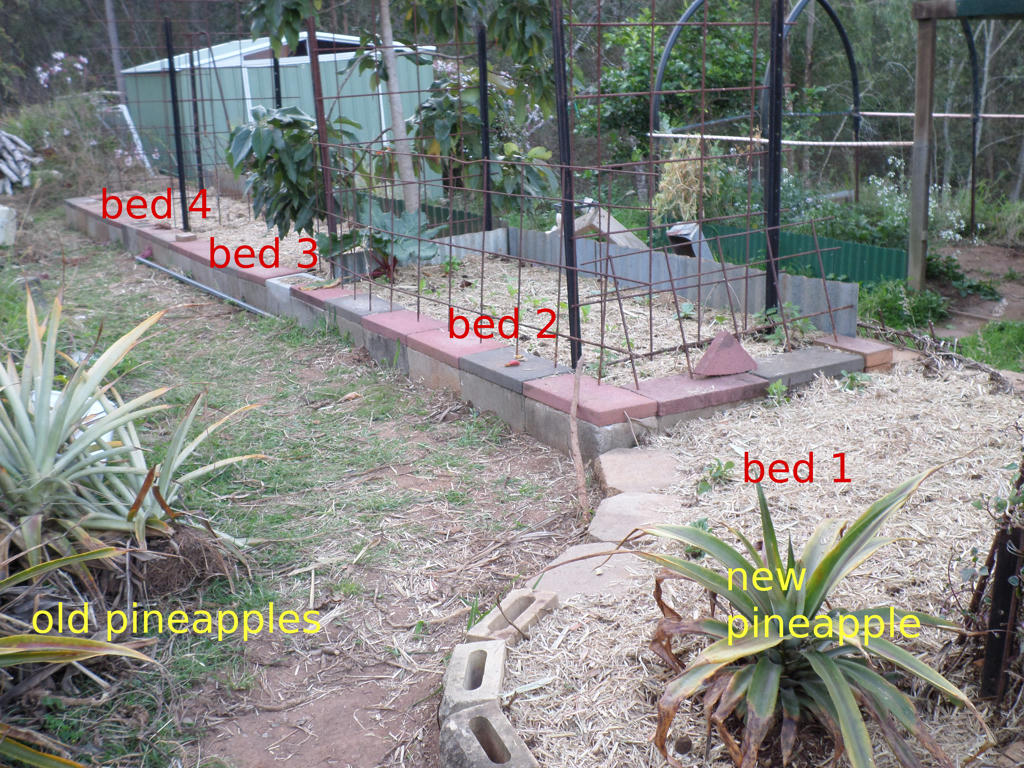
As to be expected, my summer garden isn't as promising as my spring one was. Everything is dying back, due to sporadic watering, bouts of heatwave, and pests who see the stress of plants, and move in. So my garden beds went from looking like this, in the second month of spring...


Neat and tidy in October


To looking more overgrown, but surprisingly, with very little produce to show for it now.


 Same row of beds in February


I harvested sporadic tomatoes, beans, beetroot, radishes, rubarb, zucchinis and some beautiful spaghetti squash, as well as herbs, over the growing season. But it was a battle all spring and summer to keep the garden hydrated enough.

What you can see in the image above, are the flowers of my Jerusalem artichokes.


 Jerusalem Artichokes


The rhizomes, of which, will be ready to harvest in late autumn/early winter. I will also have my Yacon, which will be ready to start harvesting around the same time. So there's more to come from my vegetable garden, but this season hasn't been without its problems either.


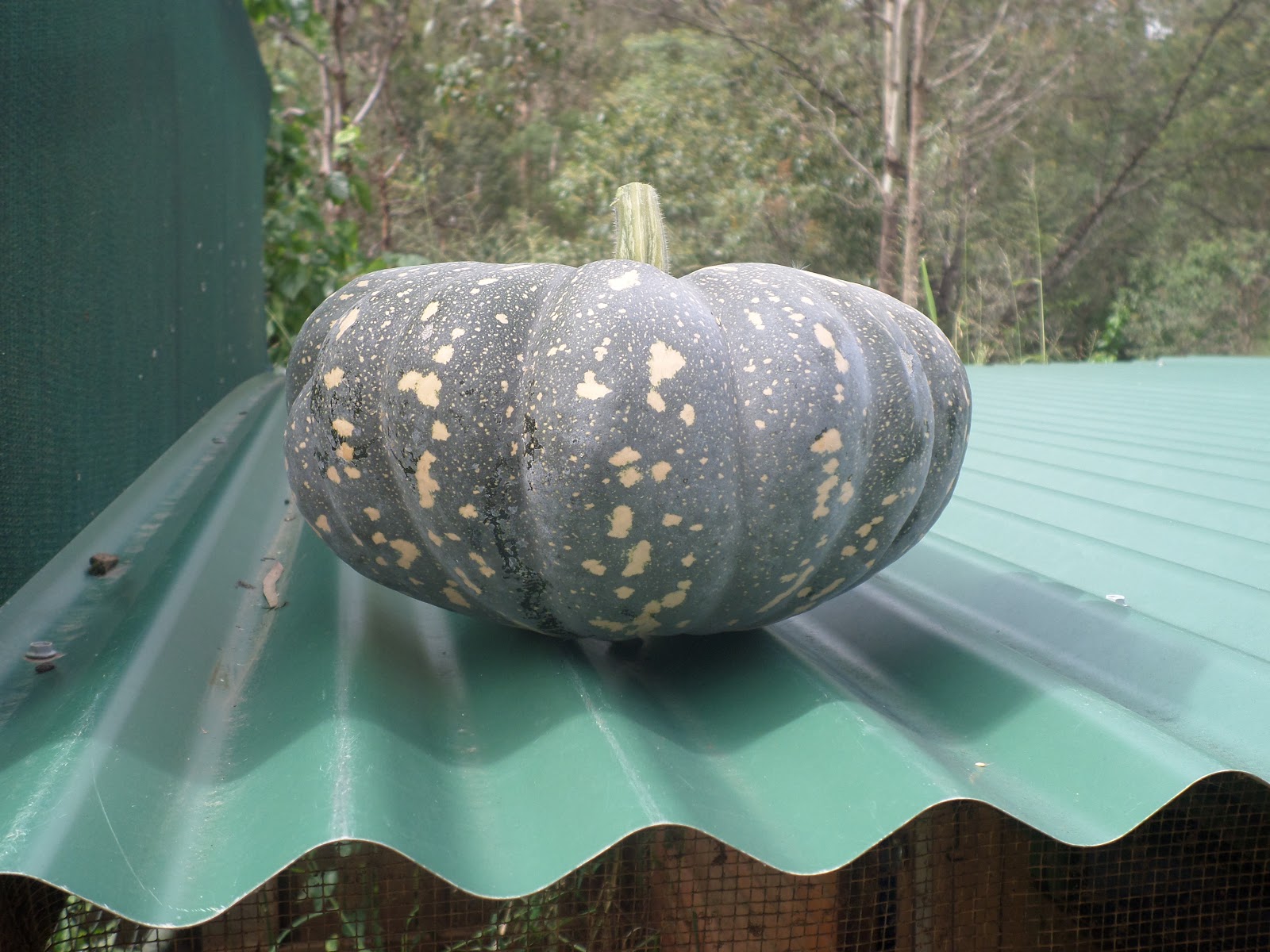
Pumpkin on a hot tin roof, to cure the skin


This is our Kent pumpkin and is one of our favourites to eat. This was the largest one to be produced. I have another four smaller ones to harvest, and that is all I've managed to grow, on three separate vines. If I were to boil it down to the major culprit of such a dismal crop, it would be a lack of balanced nutrients in our soils. My cucumbers barely managed to produce two fruits, on 4 separate vines, either.

So my task is making better soil improvements, but also exploring a better way to water - as it was a full time job to cart water by hand, to the garden every day.


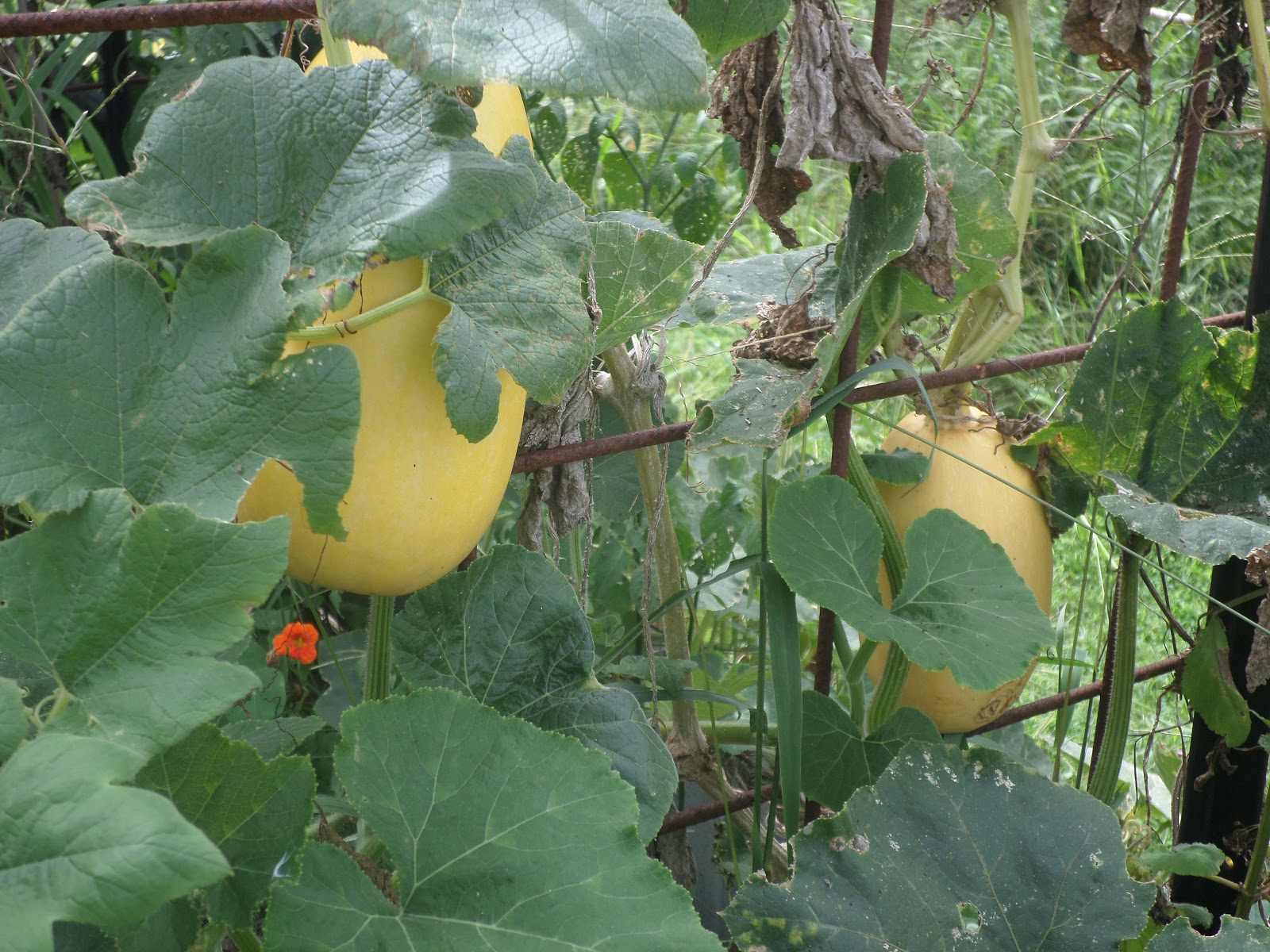
Spaghetti squash vine


These are the last of my spaghetti squash, and I will be sad to see them gone. They were a delicious meal to have with a white sauce, made from coconut cream and chopped home grown herbs. This will be a stayer in my vegetable garden, for years to come. I just have to work on improving the soil, so I can get more to produce on the vines.

Blossom end rot, was the culprit. I was actually able to get these two remaining fruits to produce, after delivering a milk spray to the leaves of the vine. I also added some magnesium, by watering the base with an epsom salt solution. That intervention, saw these two fruit emerge, which makes me very happy. Especially since I'll be having spaghetti squash, for dinner tonight!


Nasturtiums


My nasturtiums are still producing flowers, which is great to see, in an otherwise shrivelled bed. As the season has progressed and I've gotten busier, I haven't been able to water as regularly as I was. Even the rains we received, while welcome, wasn't enough to water deeply into the soil.

I'm going to completely rethink this area, as some interventions are required, if I want to produce food on a consistent basis.


Summer fruits


Here is the spaghetti squash for dinner tonight, but also two mangoes I picked from our tree. Its a tiny tree and I wasn't expecting much from it, but its produced 3 fruit. One is already ripening but the other just fell off the tree, as I went to inspect it. It may, or may not ripen on the kitchen bench.

I will give the other mango a try, after a few days on the bench. This was a lovely surprise to find in our garden. Especially since our avocado tree, managed to drop all its developing fruits.


Space invaders


This is why we had problems growing vegetable beds in this particular area, before we put in the retaining wall. The passionfruit vine would invade from above. We keep saying we're going to take out the passionfruit vine, but it does give us food we can eat, as well as the chickens, so its tough to consider its demise.

Maybe this winter? I have plans to put in beds under the wall, but hopefully they won't be ordinary beds. I don't want to soften the soil under the wall. So it will have to be raised beds, with a barrier, to suit this area.


Bananas and herbs


The banana plants we rescued, from having to cut the parent tree back, have gotten so big, I've had to transplant some into boxes. We should be able to get these in the ground, in the next few months - hopefully. We have to cut out some lantana first!


 Banana trees cut back to make way for retaining wall


Overall, if I hadn't decided to tackle the overgrown garden beds, back in August, and turn them into vegetable production areas again, I wouldn't have grown anything. So that can be considered a success! However, what I was able to produce, was sporadic and while utterly enjoyable when available, it wasn't enough to justify the labour involved.

When you tend a piece of land, you have to be able to expect a reasonable amount of calories to come out of it - to compensate for the expended energy. I don't feel I've achieved that. Not YET anyway. But I've learned a lot from this growing season, and hope to change our system to better meet the conditions.


Sunday, January 31, 2016

Relationships - part 5

This will be the final post in my series about exploring relationships. I didn't mean to wait this long to publish it, but I was, um, sorting out my relationships. You've got to make time for what matters, and relationships matter a whole lot. Ignoring them, is a fast track to dissatisfaction in life.

Remember in part 1, when I said; "The beginning of all things, I'm convinced, are the relationships to all things. The ability to relate external substance, to our own". So it starts with us. However, it doesn't end with us. We have to connect with other living things, to evaluate any meaning to our own.


With only twelve of the daylight hours to interact in those relationships however, we have to make them count. They have to be in our face, obvious and enhancing to our daily lives. By developing a daily ritual of acknowledging those living things around us, we get a little boost of self-awareness. Which is really important if we live in a high stress environment, pulling us in all directions.

I'm fortunate, I can unplug from society on our property. But you know, I have little rituals for when I leave here, to go into town also. I pack a bag of home baked goodies, some fruit and cold drinks, chilled in a freezer bag with an ice brick. I can stop any time in my jobs, and have these treats to soothe me and those I'm travelling with. Getting out and stretching our legs is another important ritual when we go into town too. I always find a car park under shade (preferably a tree) and if it involves a walk to our destination, all the better.


But here's the biggie and it tops the list. We work together as a team and make sure everyone is comfortable. If someone needs help, we stop what we're doing and alternate our strategy to best meet the situation. Paying attention to details rather than purely meeting an objective, makes the difference between experiencing life or simply tolerating it.

Because that's where satisfaction can enter the equation. Satisfaction has the wonderful side-effect of making us feel happy, but we don't necessarily, have to be in an optimal situation all the time, to find satisfaction. It's about what we practice the most in our relationships though.

Which brings me to the summary of my series on relationships.


Hold someone's hand if you need to

 . 

1. Recognise how we translate relationships - connected or disconnected?

2. Learn how connected relationships work in nature. The permaculture principles and the community which supports them, are places to start learning from. If you're someone who struggles with human relationships (feeling vulnerable or excluded from them) engaging with nature, is that bridge to seeing how connected relationships work.

3. Look for ways to integrate nature into your daily life, even if you live in the city. This point alone, will increase your perspective - even if you don't get around to the first two steps.

4. Ask others around you, if they want to get involved with enhancing nature in your community. Even if its just adopting a few plants for the office. By inviting others to get involved, it helps the community become more self-aware also.

5. And probably the most important, is committing to the process like a loving relationship. You don't expect something to love you back, if all you give is your cold shoulder and a few indifferent glimpses of your time. Commitment doesn't have to mean physical torture, every day, either. It just means touching base in some way, every day - and actually missing it, when you've tuned out for too long.

6. Practice your commitment by supporting businesses which honour the autonomy (or natural cycles) of nature. This is not a prerequisite to following the above steps, but it can help shape the world we want to reflect our connected relationships in to.

7. Repeat above steps, until you don't recognise them as steps any more.


I haven't said much about point 6 yet, of practising your commitment by supporting other businesses. By spending where the autonomy of nature is respected, however, its the ultimate compliment we can pay our communities. Because it reflects the greater abundance of natural cycles, than the continual decline of man-made ones. These actions can accumulate and pay off over time, rather than running at a continual deficit today.

As individuals, families, communities and nations, we don't practice a unique identity, which is self-aware of our environment, as part of our culture any more. Instead, we focus only on the objective of "freedom" as a goal, with no defined responsibilities, other than what the law sets out. So its good to remind ourselves of the inclusive paradigm we're actually part of.


Perhaps Earth day is an attempt, to recognise we all need to collectively take part in something bigger than ourselves. Although, I feel its somewhat limited to one day, when a person can live a whole lifetime. So every day, should be indulging in connected relationships, with other living things.

There was a time, we didn't always know what things were called, or what their purpose was, before we found a connection with them. That is our ancestral language as a species. We connect, automatically, and we are drawn in, to respond to them.

So the question becomes, WHAT do we want to be drawn into, and how aware are we, in the process of that relationship? I hope, if nothing else, I've helped you think about your relationships a little more.


Sunday, January 24, 2016

Relationships - part 4

If you've missed the previous posts in this series about relationships, you can visit by clicking on part 1, part 2 and part 3.


Our family ~ made by Sarah
Gully Grove, 2012


While I only came to discover my indigenous heritage, four years ago, my biology remembers a language about the environment, which has been teetering on my consciousness, since I can remember. Even before I could form sentences, I was listening and watching for animals in the landscape. I could see the slightest rut in the ground, of an otherwise perfect lawn. Locate that pin which dropped on the ground, camouflaged by sticks looking exactly the same. And I was always noticing the slightest movement at the corner of my eye.

After living at Gully Grove, for nearly nine years, those early observations and keen instincts are gradually returning. They're a little more blunted by the passage of time, and the busyness of young family, but I still remember them. Which is why I have hope, others can remember and hone their observation skills too. It can be helped along, the more you place yourself in a natural environment though.


The pond


My story became entwined with our property, but that's not going to be everyone's story. People will often adopt public parks and spaces, as their own too. They even get together to create organic community gardens in the city, or nurture a shrine of varied container plants, on a rented balcony.

I've even known a money centric individual, to adopt a neglected plant in their office, without being asked to. Because it elevated the feeling of their artificial space, in a way, they didn't want to be without. I remember asking them, as they ferried a jug of water to the plant, if there was a roster for people to do this job. They shrugged their shoulders and said, nope, but they would miss seeing this plant in the office, if it died - and sure others would too.


 My colourful container plants


So in the city, stuffed into an office building, covered from head to toe in designer clothes, with a diary full of social gatherings - but still, they saw the need for the plant. You see, its in our DNA. If that person could notice it, surely there's hope for many more to tune into that call for nature? Savvy businesses who actually want more productivity from their employees, will often integrate plants in the office, or build a dedicated garden outside, for individuals to take their breaks in. It helps you to relax, as nature is inclined to do.

If you don't have any of that where you are, plan to become the change your community, home, or office building needs. Invite other people to get involved in the process too. It doesn't matter how or where you start, its that you actively attempt to integrate your daily life with some natural aspect in the world. This will press all those biological buttons which say, this makes me feel happy. You're entitled to that feeling, as earth was fashioned with you in mind, as you were fashioned to keep earth in mind. Together, you are complete.


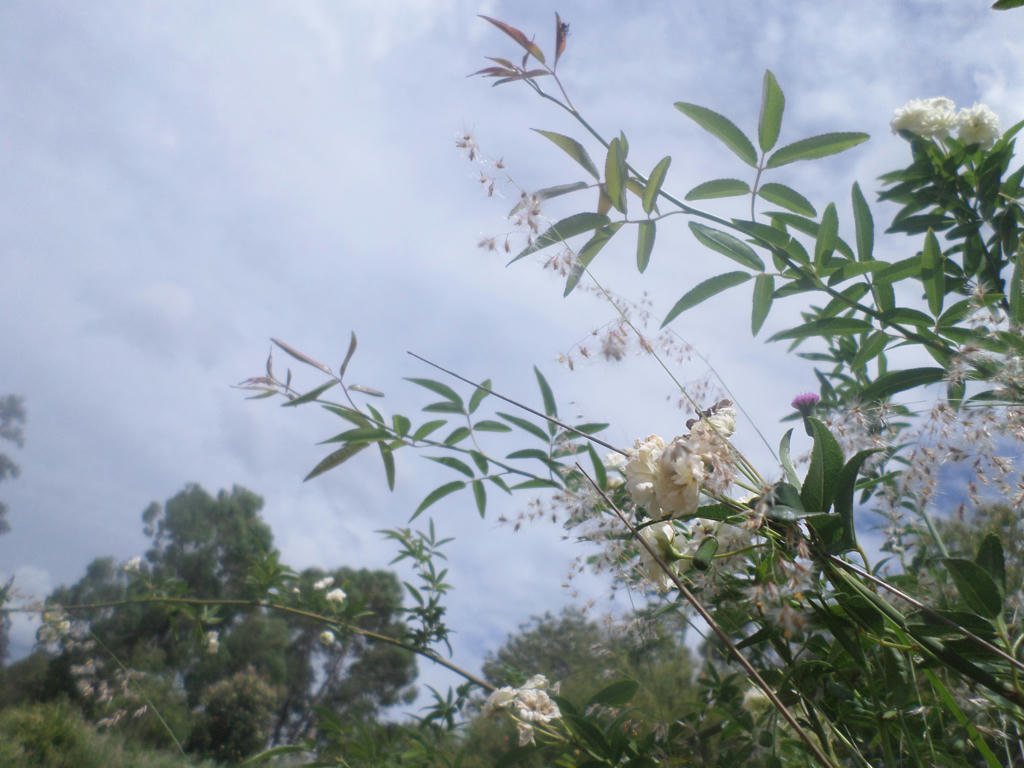
 Banksia Rose, on a cloudy day


The more you do that, the more you won't be able to fall into the daze of not noticing where you're going or what you're doing. You'll start to see things at the corner of your eye again, and find it difficult to lose your keys as often, because you'll start to see in connections again. Everything connects, you just have to sharpen your senses to remember how they do.

Nature is the place where community and nations can find their identity again. We need reminding because we're easily distracted by everything we build. A great nation will fashion its policy respecting the autonomy of nature though. It will give financial incentives to individuals and corporations, who respect the autonomy of nature to function in our communities also. It may be a pipe dream, some ways off in the distance still, but its worth mentioning anyway.

I think every generation can claim some responsibility for ignoring the environment. Some more than others. I think every generation can claim some envy for progress too. Let's just put that all in the past, apologise to nature and get on with mending our relationships in a proactive manner. That means exposing ourselves to natural things more often, and finding new ways to make connections flow into every aspect of our life.

Can any more be said than that? Well, stay tuned for part 5 soon.


Saturday, January 23, 2016

Relationships - part 3

One thing I have realised, as I write this series on relationships, is that it started to be about me, and the family I came from. But then it evolved into something else. It inevitably became the story of others too. The story of how a nation was formed, as it comes to terms with its identity. We don't really get to experience the fullness of a relationship, when we experience them alone. So, its important to recognise the other players on the scene with us.

Beyond our immediate family, is our community - beyond that is our State, and the last tier is our nation. Because we see ourselves through all those perspectives, its important to recognise them all. They are each a facet of how we experience the world around us. If you're a religious person, there's another influence to fashion perspective from also.


Connection


I posed the question, in part 2, how do we reverse the process of plundering the landscape, and start telling a different story of our relationship with it? Well, the very first step is to recognise its another player in our perspective. I had the advantage of learning of my indigenous heritage, so the stories they were telling for thousands of years, about the landscape being part of who they are - became my story too. But if I were to draw a long bow, I suspect we ALL have this understanding tucked away in our DNA.

Its why taking annual holidays abroad, is so popular. It's why so many yearn to escape the city and take a long, drive in the countryside, or go camping with family and friends. It's the biological knowledge we are to experience the landscape together, as part of who we are. Unfortunately, our modern conveniences (and some of them are sensible advances) have separated us, from the conversation and acknowledgement of our environment. Not just in how it looks, but how we see ourselves in it, and how we respond to it.


 Pause


We cannot really do that from the comfort of an air-conditioned vehicle, house and office buildings, most of the time. That important association to landscape, doesn't get acknowledged as we go about our days, keeping the industrial complex, operational. Nature barely gets a look-in, while we put our heads down, bums up and keep moving forwards. We are missing a very important piece in our daily lives however, and it shouldn't only be relegated to domain of gardeners as a hobby.

I sometimes imagine what it would have been like, if the Australian government forming at the start, decided to give the Indigenous Australians some autonomy, and asked them to contribute to how the nation was formed. For example, if they were to keep a portion of their native lands, what would be the sacred places which must not be desecrated. Giving them territory around those sacred places.


 Devil's Marbles Northern Territory
sacred site for local Aboriginal people


Perhaps, we may not have seen the destruction of habitat which so quickly followed the boats of colonisation, and progress along wit it. Maybe the droughts, farmers experienced in the 19th and 20th century, wouldn't have hit so hard and caused such large stock losses? We already know if settlers had listened to the aboriginal advice, not to build a community on the floodplains of the Murrumbidgee River, the original township of Gundagai, would not have been flooded. With 89 people loosing their lives. It was local knowledge of how flood waters moved, and the very simple technology of bark canoes, which saved 69 lives from the floods, that same event. Thanks to two aboriginal men, Yarri and Jacky Jacky.

The way we treat the environment however, is not so different from how we used to treat indigenous cultures, or those with a different background to English.  They weren't given rights, they were perceived as an abomination, rather than an enhancement to society, and they were actively targeted as the recipients of "policy" to dilute their influence on progress. We have developed new ways to treat people (to the betterment and richness of our communities) so its only a natural step to address how we treat other living things around us, better too.


 Where to start?


This is where I'd like to thank Bill Mollison and David Holgrem, for introducing the concept of permaculture to our society. It demonstrated a teaching model of how living things connect and relate to each other. More importantly though, how we should be connecting and relating within that model also. Its the first teaching model we have from a Western perspective, which is not designed to destroy living cycles, but to enhance them (and us) in our culture instead. It breaks from that singular narrative, we are so used to learning from.

Another person I'd like to thank is, Peter Andrews, for helping to create the Natural Sequence Farming, land management techniques, for our country in particular. Which helped address farming the landscape, in a completely different way, than simply scraping or burning everything from the surface, and expecting the rain or irrigation pipes, to keep things alive. It's specifically tailored for farming, which addresses the issues of food security in a much broader context, than the corporate models would have us believe is our only option.

And Joel Salatin of Polyface Inc, introduced the idea of mass production of food, while maintaining the natural cycles of the land also. How is this different to Peter Andrews and the permaculture principles? Two things. Firstly, its designed to maximise production, so the model can feed more people. As an extension (because its connected) it can also benefit the land regeneration process, quicker too. Secondly however, Salatin pushes the model as a business to make a living from and sustain communities with. Its not just the farmer out in the field, but the farmer connecting to their customer base, for local supply. That's why its called Polyface "Inc". It's a model that works, and teaches others how to feed local communities, to the betterment of the land and animals. Something corporations don't want us to believe is possible, anywhere but through their advertising of what is meant to be good for us.


 Where shall I purchase my connection today?


These new ways of discussing how the landscape SHOULD work, are the conversations we need to be having as individuals, communities, States and Nations. And we are having them, which is great. But it hasn't really shifted government policy on "progress" and the means by which, we assume prosperity for all.

The only way we can really make that shift as a nation, is to connect our communities, States and even our religious communities, to a food supply which honours the model of nature's autonomy. I was tempted to say, a "sustainable" model, but its a kitch word adopted by corporations and government nowadays, to mean anything but nature's autonomy. What it should address however, is respecting the right of the land to exist as it has for thousands of years. Even if we tweak it to increase production, it should always "keep" nature's cycles in tact.  Not destroy them. But we have to appreciate and observe the cycles, for that to take place.


Animals need the land, like we need the animals


Change doesn't have to be an aggressive shift to more natural models of food production, but we do have to make a choice to shift in great numbers if we are to have an impact. We cannot expect immediate results, if we're working at nature's speed. It will take a season or more for things to start linking up again. So we have to be patient, and keep building momentum in the direction we want to go, as a culture anyway.

The land is "our" story after all. And its time to allow it a place of respect, on our mantle.

How do we make that shift though? More to share in part 4.